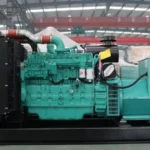
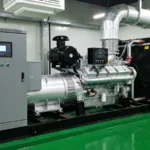
This guide establishes a systematic, end-to-end framework outlining safety procedures for installation, operation, routine inspection, and preventive maintenance. Personnel safety remains the paramount priority, alongside safeguarding equipment assets and ensuring environmental compliance.
1. Pre-Operational Safety Inspections and Preparations
1.1 Site and Environmental Inspection
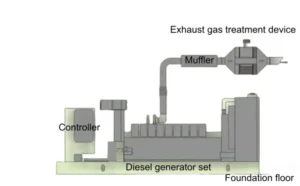
- Structural Foundation: Ensure the generator is mounted securely on a flat, heavy-duty horizontal concrete base to prevent excessive vibrations and structural fatigue during operation.
- Ventilation and Exhaust Management: Install the unit in a well-ventilated enclosure with adequate fresh air intake for combustion and system cooling. Exhaust fumes must be entirely vented outdoors through sealed piping to prevent lethal Carbon Monoxide (CO) build-up. Operation within unventilated or fully enclosed indoor spaces is strictly prohibited.
- Fire Safety Provisioning: Equip the installation area with certified, fully charged fire suppression equipment, such as dry powder or CO₂ fire extinguishers, situated in easily accessible locations.
- Clearance and Cleanliness: Keep the surrounding perimeter clear of combustible or explosive materials (e.g., fuel rags, paper, solvent containers) and physical obstructions.
1.2 Subsystem Pre-Start Checks
- Fuel Subsystem:
- Verify fuel levels in the day tank before powering on. Always shut down the engine completely and strictly prohibit open flames or smoking during refueling.
- Inspect all fuel supply lines, fittings, and filters for signs of leakage, cracking, or deterioration.
- Lubrication Subsystem: Inspect engine oil levels using the dipstick; the fluid level must read firmly between the
LOW (L)andHIGH (H)indicators. Verify oil viscosity and grade against manufacturer specifications. - Cooling Subsystem:
- Check coolant level in the expansion tank (must sit between
FULLandLOW). Warning: Never remove the radiator cap or coolant tank lid when the engine is hot to avoid severe thermal burns. - Verify cooling fan belt tension and check for belt fraying or wear.
- Check coolant level in the expansion tank (must sit between
- Electrical Subsystem & Grounding:
- Ensure a dedicated, reliable earth/ground connection is securely clamped to the generator frame to prevent electrical shock.
- Confirm that the main output circuit breaker is locked in the
OFFposition prior to startup. Inspect power cables for damaged insulation, loose connections, or exposed wiring.
1.3 Final Pre-Launch Verification
- Ensure all protective guards (fan guards, belt covers, heat shields) are securely fastened in place.
- Verify that load circuits are disconnected from the utility grid using an Automatic Transfer Switch (ATS) or interlocked manual switch to prevent hazardous grid backfeeding.
2. Operational Safety and Active Monitoring
2.1 Personal Protective Equipment (PPE)
Operators must wear fitted workwear. Avoid loose clothing, neckties, dangling jewelry, unbuttoned sleeves, or unconfined long hair that could become caught in rotating shafts or cooling fans. Hearing protection (earplugs or noise-canceling earmuffs) is mandatory during operation due to elevated decibel levels.
2.2 Startup, Warm-Up, and System Diagnostics
- Allow the engine to idle under no-load or low-load conditions for several minutes after start-up to establish baseline oil pressure and coolant temperature.
- Monitors all control panel parameters continuously, paying strict attention to oil pressure gauge readings, coolant temperature, system voltage, and AC frequency output. Shut down the unit immediately upon detecting anomalous readings.
- Listen closely for abnormal mechanical knocking, excessive vibration, electrical arcing noises, or pungent chemical odors.
2.3 Load Management
- Apply electrical load progressively rather than slamming step loads onto the alternator, preventing frequency drops or mechanical shocks.
- Never run the generator set above its rated continuous capacity. Overloading causes severe overheating, reduces engine lifespan, and presents a severe fire hazard.
- Maintain balanced phase loads across three-phase systems; severe phase imbalance can overheat and destroy alternator windings.
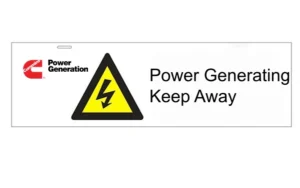
3. Critical Hazards and Prohibited Practices
Hazardous Area Warning: Never operate standard diesel generators in explosive atmospheres or vapor-heavy environments, as electrical components can generate arcs capable of triggering ignitions.
- Unauthorized Modifications: Do not tamper with or adjust system settings, governors, or fuel injection pumps unless trained and authorized. Use only genuine OEM replacement parts.
- Refueling Precautions: Never refuel a running or hot engine (except in certified continuous-duty auto-fill installations). Clean up spilled fuel immediately and dispose of oily rags in fire-safe containers.
- Hot Surface Protection: Avoid contact with high-temperature components such as turbochargers, exhaust manifolds, and silencers. Keep flammable materials far clear of hot engine zones.
- Battery Hazards: Keep sparks and naked flames away from lead-acid storage batteries. Battery off-gassing produces explosive hydrogen gas. Wear chemical safety goggles and gloves when handling battery acid to prevent severe chemical burns.
- Maintenance Safety Interlocks: Always disconnect battery terminals (starting negative cable first) and isolate the starter motor before servicing to prevent unintended remote auto-starting. Place clear tagout notices on the control panel:
DO NOT START – UNDER MAINTENANCE. - High-Pressure Fluid Hazards: Always depressurize fuel, hydraulic, and lubrication lines prior to loosening fittings or removing hoses. High-pressure oil or fuel leaks can penetrate human skin, causing severe tissue damage and toxicity. Never use unshielded hands to search for pinhole fluid leaks.
- Coolant and Chemical Safety: Engine antifreeze contains toxic alkaline substances. Avoid direct skin contact and vapor inhalation. In case of eye contact, flush thoroughly with clean water for 15 minutes and seek immediate medical evaluation. Keep out of reach of children.
- Proper Manual Crank Techniques: Only use designated turning tools to manually rotate the engine crankshaft. Attempting to rotate the engine by pulling on the cooling fan blades will damage the fan structure and risks severe personal injury.
- Rigging and Hoisting Rules: When lifting the generator set, attach rigging exclusively to designated lifting lugs. Ensure all cables, chains, or spreader bars pull vertically parallel to avoid bending top-mounted engine components or shifting the center of gravity. Never work under a suspended generator set.