Watch the Test
Live FAT & Inspection Video
Live FAT & Inspection Video
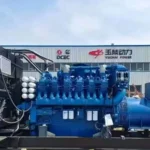
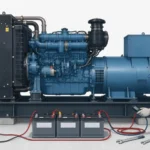
The walk-through below covers the load bank run, the controller readings and the canopy sound measurement taken during the visit.
Ratings on a datasheet are calculated. They are produced under controlled conditions, on a bench, by an engineer who knows exactly what the machine is supposed to do. What matters to a buyer is different: does this particular unit, with this engine, this alternator and this canopy, actually hold its numbers while it is running hot, under load, after two hours of continuous duty?
A FAT answers that question before the container is sealed — not after it lands 8,000 km away.
Calculated
Values derived from design parameters and type testing. Steady-state ratings at rated speed, rated power factor and ambient reference conditions. Valid, comparable, and necessary — but they describe a category of machines, not the one you are buying.
Measured
Readings taken from your unit, on a load bank, while it is hot. Voltage and frequency under steady load, transient response to load steps, sound pressure at a defined distance, and a physical inspection of the finished machine.
For buyers in African markets the stakes are higher than usual. Long shipping times, limited availability of local spares, and sites where the grid is unreliable or absent mean a unit that fails on arrival does not cause a delay — it causes a shutdown. Running the machine under load while your own representative stands next to it is the cheapest insurance available in this business.
A full-load run on a load bank, steady-state voltage and frequency readings, a step-load test to check transient response, verification of the control and protection logic, a sound pressure measurement at a defined distance, and a final structural and finishing inspection.
If any of these six is missing, you are not seeing a FAT — you are seeing a walk-around.
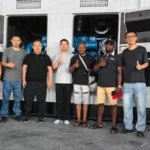
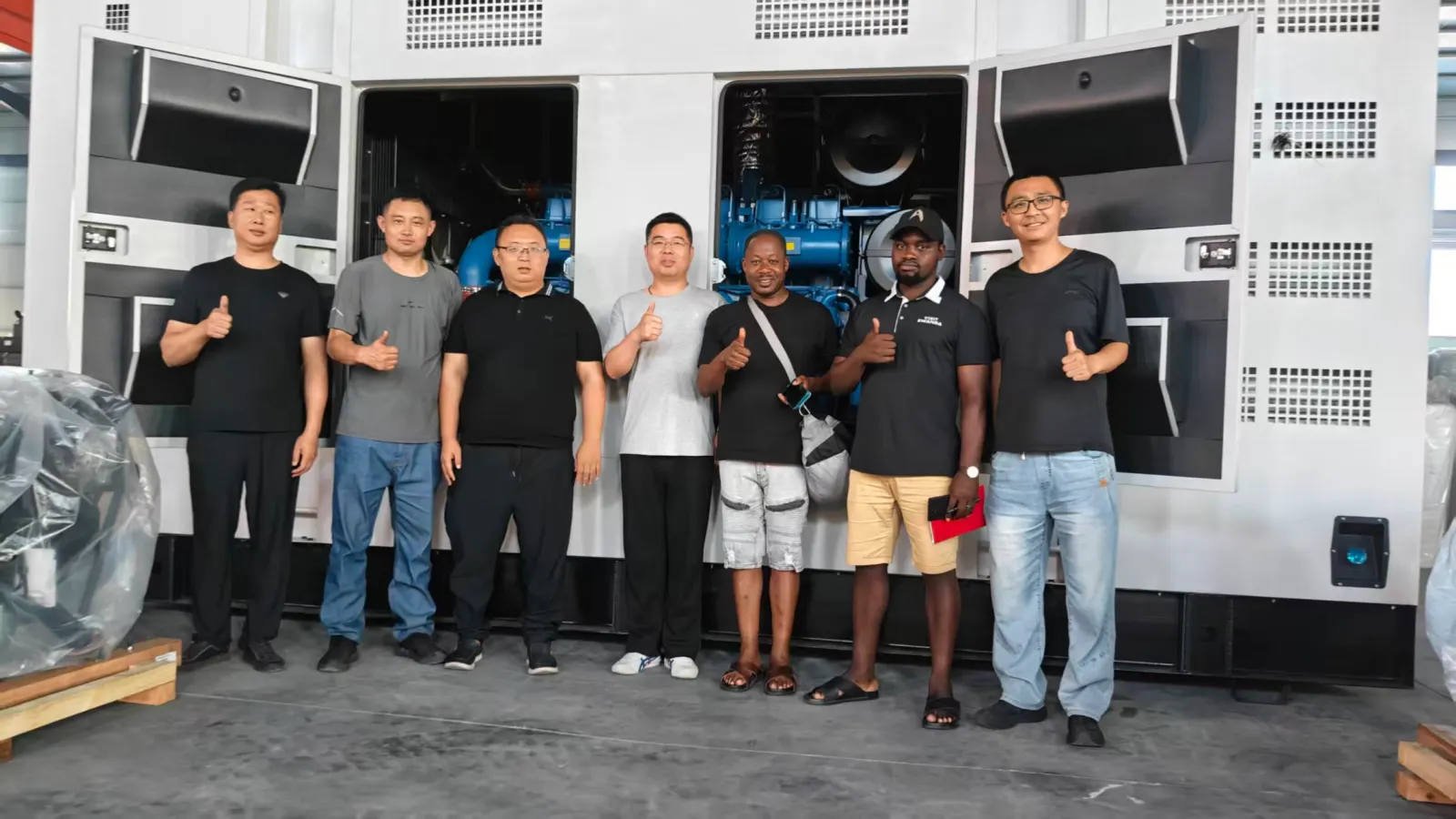
The client we hosted for this test is a long-term partner from Africa who also works inside the generator set industry. That detail matters more than any testimonial we could write.
Someone who sells, services and commissions generator sets for a living has no reason to keep buying from a supplier whose machines let him down. A second and third order from a professional is worth more than a hundred references from a first-time buyer.
He did not come to watch a demonstration. He came with a checklist, and he went through it with our engineers point by point.
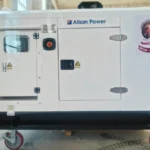
The machine on the test floor was built for standby and prime power duty in demanding environments. Its canopy is engineered for two jobs at once: keeping weather out and keeping noise in — requirements that pull in opposite directions, since acoustic enclosures want to be sealed while engines need air.
| Rated output | 37.5 kVA / 30 kW |
| Application | Standby and prime power |
| Enclosure | Soundproof canopy, weatherproof construction |
| Sound pressure level | ≤ 75 dB(A) at 7 m, full load |
| Control & start-up | Digital controller with automatic transfer switch (ATS) logic |
The walk-through below covers the load bank run, the controller readings and the canopy sound measurement taken during the visit.
Our client and our engineering team worked through a four-stage verification protocol on the 37.5 kVA unit. Each stage answers a different question, and each one is capable of stopping a shipment.
| Test stage | What is verified | Why it matters on site |
|---|---|---|
| Electrical parameter calibration | Steady-state voltage, frequency stability, and transient response when load is applied or removed suddenly | Voltage dips on load steps are what damage sensitive equipment — not the steady-state rating |
| Control and protection integration | Digital controller readings, telemetry, alarm thresholds, automatic transfer switch (ATS) trigger logic and safety shutdowns | An unattended set must start, transfer and shut itself down safely without human judgement |
| Acoustic canopy evaluation | Sound pressure measured under full load at a defined distance, confirming compliance with the ≤ 75 dB(A) at 7 m target | Noise limits are a permit issue on urban and telecoms sites, not a comfort issue |
| Structural and finishing sign-off | Anti-vibration mounts, integrity of the base-frame fuel tank, industrial coating coverage, and readiness for export packing | Most transport damage and early corrosion trace back to details checked in the last ten minutes |
Buyers often judge a silent canopy by how thick the walls look. In practice, noise control on a generator set is a system problem with four parts, and the foam is only one of them.
Fire-retardant, oil-resistant lining inside the canopy that does not degrade in heat or crumble with vibration. Cheap foam sags, absorbs oil and stops working within two seasons.
A residential or industrial grade silencer sized to the engine. The exhaust outlet is usually the loudest single source on the machine — no amount of wall lining will fix an undersized silencer.
Intake and discharge routed through baffled plenums so air can move freely while sound has no straight line out. This is the hardest part to retrofit and the easiest place for a low-cost canopy to cut corners.
Anti-vibration mounts between the engine-alternator assembly and the base frame. Structure-borne noise travels further than airborne noise — it goes through the ground, not the air.
At what distance was the decibel figure measured? Was the set at full load? And was the measurement taken in free field conditions?
A “65 dB” claim without those three conditions is not comparable to a “75 dB(A) at 7 m under full load” claim — it is simply a smaller number.
With the test protocol complete and the readings signed off, the unit moved directly into anti-corrosive export packaging. For sea freight to African ports, that means moisture protection, corrosion inhibitors on exposed metal, and a packing specification that assumes weeks of humidity and salt-laden air before the container is opened.
Test records and signed readings • Wiring diagrams • Operation and maintenance manual • Recommended spare parts list for the first 2,000 running hours.
That last item is the one buyers most often forget to ask for. Knowing which filters, belts and seals to have on the shelf before the first service interval is what turns a good machine into an asset that stays online.
Tell us your requirements and destination port — we reply with a quotation within 12 hours.
Shall we talk now? You can reach us on WhatsApp.
WhatsApp Us