作者归档:jzxadmin

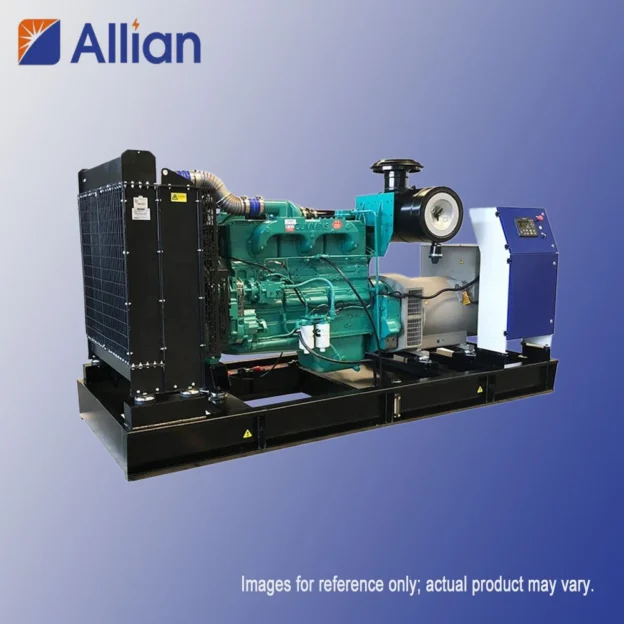
313kVA/250kW Diesel Generator (Cummins NTA855-G1B) APC250GF-2 | Allian Power

GENERATOR SET SPECIFICATIONS
Standby Power 313 kVA/250 kW
Prime Power 281 kVA/225 kW
Voltage 380/220V, 400/230V, 415/240V
Frequency 50 Hz
Speed 1500 rpm
ENGINE
Manufacturer Cummins
Engine Model NTA855-G1B
ALTERNATOR
Stamford S4L1D-D41 248KW
Leroy Somer TAL-A46-G 260KW
Marathon MP-250-4A
Allian Power APF250 250kW
Type 100% Copper, Brushless, Self-Excited
Protection Class IP23 Protection
CONTROL SYSTEM & ENCLOSURE
Control Panel Manual/Autostart Optional, Brand: Deep Sea, SmartGen, ComAp
Construction Highly Corrosion Resistant Construction with Shock Absorbers
Enclosure Features Weatherproof & Soundproof Canopy with Integrated Fuel Tank & Exhaust Silencer

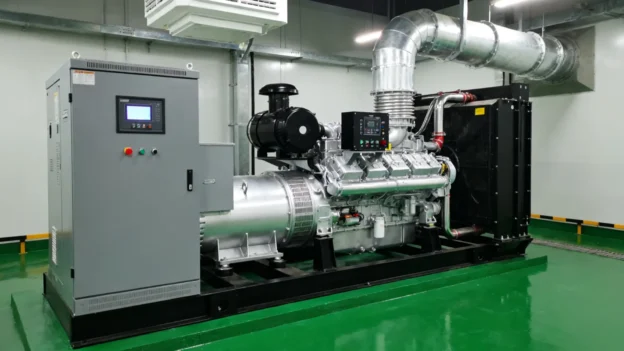
Diesel Generator Room Design: Sizing, Ventilation & Foundation

The design of a diesel generator room involves multiple disciplines and links, so its layout requires strict adherence to a set of principles and standards. These standards are critical to ensuring the safe, stable, and efficient operation of equipment, as well as the safety of personnel and the environment. Importantly, the rational layout of a diesel generator room is not just about complying with norms—it brings a series of tangible and vital benefits, which can be summarized into four core values: safety, reliability, economy, and environmental protection. In this article, Allianpower will sort out the layout principles, standard requirements, and practical benefits of diesel generator room design.

I. Key Points for Diesel Generator Room Design

1. Layout Principles

  • Safety First: This is the most fundamental and important principle, covering fire prevention, explosion prevention, electric shock prevention, exhaust gas poisoning prevention, noise hazard prevention, and other aspects.
  • Ease of Operation and Maintenance: The equipment layout should reserve sufficient space for operation, maintenance, and inspection—especially around the unit, at the radiator end, and in front of the power distribution panel. Consider the transportation channel for large equipment; if necessary, reserve hoisting holes or install bridges.
  • Optimized Operating Environment: The focus is on ventilation, heat dissipation, and temperature reduction. Good ventilation is key to ensuring the rated output and service life of the unit. Avoid air short-circuiting to ensure that fresh air can fully enter and hot air can be smoothly discharged.
  • Minimizing Environmental Impact: Control external noise through effective sound insulation and silencing measures; reduce exhaust pollution through high-altitude emission and potential exhaust gas purification treatments.

2. Practical Tips for Equipment Selection and Capacity Control

  • Unit Selection: Prioritize products with small overall size, light weight, and few auxiliary equipment. Pay attention to the room height and the channels for installation, maintenance, and transportation. Generally, air-cooled units can be selected. It is also necessary to consider the impact of the unit’s installation environment, climate, altitude, and other factors on its capacity, and take appropriate correction coefficients according to the product technical specifications.
  • Ways to Reduce Diesel Generator Capacity: Optimize load demand through consultation with relevant disciplines. For example, negotiate with the fire protection discipline to minimize the motor capacity of fire pumps while meeting fire water demand; adopt step-down starting for large-power asynchronous motors; adjust the starting sequence as much as possible—start large-capacity equipment first, then start small-capacity equipment in sequence, and finally connect other loads with no impact.

3. Multi-Disciplinary Collaboration and Considerations

  • The design and layout of a diesel generator room require close cooperation among multiple disciplines, including architecture, structure, electrical engineering, HVAC (heating, ventilation, and air conditioning), water supply and drainage, and power. Electrical engineers put forward requirements, and other disciplines complete their respective design tasks accordingly.
  • All designs must comply with the latest national and local standards and specifications. This article is based on the collation of existing search results, but standards may be updated—be sure to check the latest version.
  • Specific projects may have their own particularities and additional requirements. During design, apply standards flexibly and conduct full communication and confirmation with relevant authorities (such as fire protection, environmental protection, and power supply departments).

Table 1: Core Design Dimensions and Key Points of Diesel Generator Rooms

Design Dimension Core Requirements & Key Points
Building Location Preferably located on the first floor or basement 1st/2nd floor; avoid being adjacent to or above/below densely populated areas; should not be located directly below or adjacent to areas prone to water accumulation.
Fire Separation Adopt fire partitions with fire resistance rating ≥2h + non-combustible floors with fire resistance rating ≥1.5h; Grade A fire doors; the oil storage room and generator room shall be separated by fire partitions with fire resistance rating ≥3h, and the door shall be a Grade A fire door (opening towards the generator room).
Equipment Layout Meet the requirements for equipment operation, maintenance, and ventilation; set up a control room according to capacity (recommended for units >500kW); ensure smooth air exhaust from the radiator; minimize elbows in the exhaust pipe, insulate the pipe, and drain water at low points; ensure equipment spacing and channel width meet requirements.
Oil Storage Room Total oil storage capacity ≤1m³ (for fire protection); use explosion-proof lamps and electrical appliances; sealed oil tanks with vent pipes led outdoors and breathing valves with flame arresters; anti-leakage and anti-oil spreading measures for the ground and trenches.
Ventilation & Exhaust Good air intake and exhaust (air inlets should be directly opposite the generator end or on both sides); insulate the exhaust pipe (surface temperature ≤50ºC); discharge exhaust gas at high altitude to areas not affecting personnel and the environment; mechanical ventilation and emergency exhaust shall be considered for underground rooms.
Environmental Protection (Noise/Exhaust) Conduct sound absorption and insulation treatment inside the room; install high-efficiency silencers on the exhaust pipe; perform silencing treatment on outdoor air outlets and inlets; ensure that the on-site noise meets standards; exhaust gas emission complies with environmental protection requirements.
Electrical & Lighting Use fire-resistant copper-core cables for power distribution lines; reliable grounding (grounding resistance ≤4Ω); anti-static grounding for the oil storage room; standby lighting and emergency lighting (illumination shall be 200Lx and 100Lx respectively).
Fire Protection & Alarm Install an automatic fire alarm system (temperature-sensitive detectors are preferred); install a gas fire extinguishing system (e.g., heptafluoropropane); set up a dedicated fire telephone extension; equip with mobile fire extinguishers.
Water Supply & Drainage The cooling water system shall meet water quality requirements; closed circulation systems shall be equipped with high-level expansion tanks; install hand basins and floor-mounted sinks in the room; trenches shall have drainage and oil discharge measures (0.3% slope).

II. Benefits of Rational Diesel Generator Room Layout

1. Enhanced Safety and Reliability

This is the most fundamental and important benefit. A rational layout directly determines whether the room can operate safely and stably in emergency situations.

  • Personnel Safety Guarantee: Strict fire separation (fire walls, fire doors), reliable exhaust gas emission systems (preventing carbon monoxide accumulation), and effective noise prevention measures jointly ensure the personal safety of operation and maintenance personnel and nearby residents, avoiding occupational risks such as poisoning and hearing damage.
  • Equipment Safety Guarantee: A good layout provides a suitable operating environment for equipment. Sufficient air intake and exhaust prevent the generator from load reduction or shutdown due to overheating; reasonable spacing avoids overcrowding of equipment, facilitating daily inspection and maintenance and timely detection of potential problems.
  • Emergency Power Supply Reliability: When the municipal power supply is interrupted, a reasonably designed room ensures that the generator starts quickly, switches seamlessly, and continuously supplies power to critical loads (such as fire elevators, emergency lighting, data center servers, etc.) until the municipal power supply is restored. This is the ultimate goal of the entire emergency power supply system.

2. Optimized Operational Efficiency and Economy

A rational layout can significantly reduce the long-term operation and maintenance costs of the room.

  • Improved Power Generation Efficiency: Diesel generators achieve the highest efficiency at rated operating temperatures. Excellent ventilation and heat dissipation design can effectively control the room temperature within the ideal range, avoiding efficiency reduction and insufficient output power of the unit due to overheating, thereby saving fuel consumption.
  • Reduced Fuel Costs: Improved efficiency directly means less diesel is needed to generate the same amount of electricity, which is a considerable saving in the long run.
  • Lower Maintenance Costs: A clean, dry, and well-ventilated environment reduces the erosion of dust and moisture on the engine, control system, and radiator, extending equipment service life and reducing failure rates and the frequency of parts replacement.
  • Avoidance of Fines and Rectification Costs: Compliance with environmental protection (noise, exhaust gas) and fire protection standards avoids penalties and expensive later transformation costs due to violations.

3. Ease of Operation and Maintenance

A rational spatial layout is most user-friendly for operation and maintenance personnel.

  • Sufficient Operation Space: Reserve sufficient maintenance channels around the equipment, in front of the power distribution panel, and at the radiator end, facilitating daily operations, instrument reading, fault diagnosis, and maintenance work, and improving work efficiency.
  • Convenient Equipment Replacement: Consider equipment transportation channels (such as hoisting holes, sufficiently wide doors), making it possible to replace large components (such as engines, generator bodies) or the entire unit in the future without large-scale destructive transformation of the building.
  • Simplified Inspection Routes: Clear channels and reasonable equipment arrangement make daily inspection routes shorter and smoother, with no dead ends, making it easy to detect problems such as leakage.

4. Compliance with Environmental Protection and Regulatory Requirements

This is a necessary condition for the project to pass acceptance and obtain permits.

  • Noise Control: Through sound insulation and silencing measures, control the operating noise and exhaust noise of the unit within the limits required by environmental protection regulations, avoiding disturbance to the surrounding environment (such as office buildings, hospitals, residential areas).
  • Compliant Exhaust Emission: Design the exhaust pipe reasonably to ensure high-altitude emission and sufficient diffusion of exhaust gas; cooperate with necessary treatment devices to meet air pollutant emission standards.
  • Pollution Prevention: Anti-leakage design and drainage/oil discharge measures in the oil storage room effectively prevent soil and groundwater pollution caused by diesel leakage.

5. Maximized Space Utilization and Overall Coordination

This is particularly important in urban buildings where space is expensive.

  • Compact and Efficient: On the premise of meeting all safety spacing and operation requirements, minimize the total area required by the room through refined design, freeing up valuable space for other functional areas.
  • Seamless Integration with the Building: Rational site selection and layout (such as the location of air inlets, air outlets, and exhaust ports) can better integrate with the building’s facade and internal circulation, reducing negative impacts on the building’s appearance and functional layout.

Table 2: Comparison Between Rational and Irrational Diesel Generator Room Layout

Aspect Benefits of Rational Layout Potential Risks of Irrational Layout
Safety Eliminates fire, explosion, and poisoning hazards Major safety hazards exist, threatening life and property safety
Reliability 100% reliable start-up and power supply in emergencies Possible failure to start, overheating shutdown, and power supply interruption
Economy High operating efficiency, low maintenance costs, and long service life High fuel consumption, frequent failures, expensive maintenance, and shortened service life
Environmental Protection Compliant noise and exhaust emission, no complaints or fines Continuous environmental complaints, facing penalties and rectification
Operation & Maintenance Easy operation, convenient maintenance, and easy equipment replacement Cramped space, inability to perform maintenance, and need to demolish walls for equipment replacement

III. Basic Installation Content of Diesel Generator Rooms

When installing a generator set, the main factors to consider include the floor load-bearing capacity, channels and maintenance space, vibration, ventilation, exhaust pipe connection and insulation, noise reduction, fuel tank size and location—all in accordance with local or national environmental protection regulations.

1. Foundation and Installation

  • Anti-Vibration Devices: For Cummins series diesel generator sets, high-efficiency anti-vibration devices are pre-installed, which can eliminate approximately 85-90% of the unit’s vibration. At the same time, the unit is equipped with bellows for exhaust system installation when leaving the factory, which are used to isolate the unit’s vibration from the exhaust system. During installation, users should take necessary anti-vibration measures simultaneously, such as using flexible connections for output cable connections, adopting elastic bell mouth air guide grooves for air outlets, and elastic hoisting for the exhaust system.
  • Foundation Requirements: Cummins series units have excellent anti-vibration performance, so no specific foundation is required for the generator set. The unit can be directly installed on a horizontal and sufficiently strong concrete floor. The floor should be horizontal and flat (flatness requirement within a 0.5º plane) and must be able to bear 1.5-2 times the static weight of the generator set.
  • Foundation Size Calculation: If the floor in the room cannot meet the load-bearing requirements, a concrete foundation can be used for installation. This is a simple, reliable, and low-cost installation method. The specific method is shown in Figure 1 and Figure 2. The thickness of the machine base can be designed and calculated according to the following formula:
FD = W/(D×B×L) —— (Formula 1)
  • FD: Thickness of the machine base (m)
  • W: Total wet weight of the generator set (Kg)
  • D: Concrete density (2,403 Kg/m³)
  • B: Width of the machine base (m)
  • L: Length of the machine base (m)

The concrete foundation should usually be 100-200mm higher than the ordinary floor to form a base. When pouring the concrete foundation platform, ensure that the concrete foundation is horizontal and that the foundation platform has sufficient capacity to bear the generator set.

Diesel generator room concrete foundation construction diagram with bolt installation, equipment layout, ventilation, and exhaust system details

2. Layout Considerations for Diesel Generator Rooms

The conventional layout of a diesel generator room is shown in Figure 3 and Figure 4.

  • The diesel generator room must have sufficient space to allow free air circulation, which is very important for ensuring the normal performance of the unit, reducing the power loss of the unit, and ensuring the normal service life of the unit. No other flammable and explosive materials, or objects that may be drawn into the unit’s protective net or directly sucked into the unit body and affect the normal use of the unit, should be placed inside the room.
  • For the installation of units without special requirements, the design requirements for the room are not high. It only needs to ensure that the air inlets and outlets of the room meet the technical specifications (on the premise that the exhaust back pressure does not exceed the specified value), avoid hot air backflow, and reserve sufficient operation and maintenance space inside the room.
  • For some rooms that need to make and place backup fuel tanks inside, attention should be paid to isolating them from the main space of the room and meeting the requirements of local environmental protection and fire protection departments.
  • The room should be equipped with sufficient air inlets and outlets. If the cooling capacity of air intake and exhaust is insufficient, an additional exhaust duct should be installed or a remote water tank installation method should be adopted. When selecting the specific placement position of the diesel generator set in the room, priority should be given to reserving sufficient operation and maintenance space and air circulation space around and above the unit.
  • When supporting facilities such as an automatic transfer switch (ATS) system or a synchronous parallel operation system are installed in the room, sufficient operation and maintenance space should be reserved around the equipment.

Conclusion

In summary, the rational layout of a diesel generator room is an investment with extremely high returns. It may require more design thinking and coordination in the early stage, but in return, it brings safety, peace of mind, cost savings, and reliability throughout the building’s life cycle. It ensures that this “last lifeline” is absolutely trustworthy at critical moments. We hope this information will help you fully understand the layout principles and standard requirements of diesel generator rooms. If you have more specific application scenarios (such as a specific type of building) or in-depth questions about a certain detail, Allianpower is willing to provide further information.

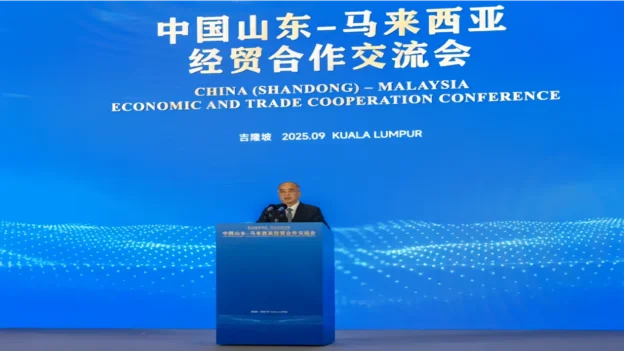
AllianPower attend China (Shandong) – Malaysia Economic and Trade Cooperation Conference Held in Kuala Lumpur

KUALA LUMPUR, September 23, 2025​ – The China (Shandong) – Malaysia Economic and Trade Cooperation Exchange Meeting was successfully convened at W Hotel in Kuala Lumpur, Malaysia.


The event featured addresses and speeches by distinguished guests including Mr. Lin Wu, Secretary of the Shandong Provincial Committee of the Communist Party of China and Director of the Standing Committee of the Shandong Provincial People’s Congress; Mr. Fan Bo, Standing Committee Member of the Shandong Provincial Party Committee and Secretary-General; Mr. Zheng Xuefang, Chargé d’Affaires ad interim of the Embassy of the People’s Republic of China in Malaysia; YB Mr. Chang Lih Kang, Minister of Science, Technology and Innovation of Malaysia; Tan Sri Dato’ Sri Dr. Low Kian Chuan, Chairman of the Malaysia-China Business Council; Mr. Rashidi Said, Senior Director of the Bilateral Economic Relations Division, Ministry of Investment, Trade and Industry of Malaysia; and Dato’ Ng Yek Pyu, President of the Associated Chinese Chambers of Commerce and Industry of Malaysia. Senior officials from relevant cities in Shandong Province and heads of relevant provincial departments also attended the meeting.

This Conference was a significant event during the Shandong Economic and Trade Delegation’s visit to Malaysia. Mr Zhang Sijing, President & Chief Engineer of Allian Power, Mr. Eric Wu, Vice President & International Director of Allian Power, was honored to be invited to participate and represented Allian Power in a signing ceremony with a Malaysian partner company.

In his speech, Mr. Zheng Xuefang, Chargé d’Affaires ad interim of the Chinese Embassy in Malaysia, stated that Shandong is not only a crucial cradle of Chinese civilization but also one of China’s most economically dynamic provinces. He highlighted Shandong’s robust industrial foundation and comprehensive range of manufacturing sectors, with “Shandong Manufacturing” and “Shandong Creation” gaining global recognition. Noting the vitality of Shandong’s outward-oriented economy and Malaysia’s role as a key regional hub for trade and investment, Mr. Zheng emphasized the shared commitment of both sides to seeking development through openness and mutual benefit through cooperation, characterizing them as strong partners in the Belt and Road Initiative. He described the collaboration between Shandong and Malaysia as a partnership for industrial upgrading and kinetic energy conversion, an alignment of the principles of open cooperation and mutual benefit, and a dialogue between the birthplace of Confucian civilization and a significant representative of Islamic civilization. With this year marking the beginning of a new “Golden 50 Years” for China-Malaysia relations, Mr. Zheng expressed confidence that Shandong-Malaysia cooperation is poised to embrace new opportunities. He encouraged more Shandong enterprises to invest in Malaysia and welcomed more Malaysian businesses to explore opportunities in Shandong.

Mr. Lin Wu, Secretary of the Shandong Provincial Party Committee, noted that economic and trade ties between Shandong and Malaysia are growing increasingly close, with Malaysia having become Shandong’s largest trading partner within ASEAN. He expressed Shandong’s willingness to work with Malaysia to deepen collaboration in industrial and supply chains, continuously expand two-way investment, and strengthen cooperation in sectors such as chemicals, energy, and electronic information. He also proposed exploring broader trade markets by vigorously developing new forms of business like cross-border e-commerce to cultivate more growth points; jointly enhancing maritime cooperation advantages by strengthening collaboration in port construction, marine transportation, and marine industry synergy and innovation to bolster the blue economy; and enhancing cooperation in emerging fields by actively aligning with Malaysia’s strategies such as its digital plan and energy transition, deepening collaboration in artificial intelligence, integrated circuits, and clean energy development, thereby injecting strong momentum into each other’s development.

YB Mr. Chang Lih Kang, Minister of Science, Technology and Innovation of Malaysia, emphasized Malaysia’s commitment to driving energy transition and sustainable growth, actively developing its hydrogen economy, renewable energy technologies, and biotechnology. He expressed hope that both sides would strengthen cooperation in advanced materials, smart agriculture, and aquaculture, combining Malaysia’s innovation ecosystem with Shandong’s industrial strengths to contribute to sustainable development for both countries and the region.

Allian Power has always placed high importance on cooperation and development within the ASEAN region, particularly in Malaysia. Over the years, the company has provided product resources – including power machinery, energy equipment, diesel generators, gas generators, and power engine, agricultural equipment – to dozens of Malaysian clients. These products align with Shandong’s key industrial strengths and have earned a strong reputation among clients both domestically and internationally, making a unique contribution to Shandong-Malaysia commercial cooperation. In recent years, Allian Power has actively seized opportunities presented by national strategies like the Belt and Road Initiative and RCEP. Through global layout and industrial synergy, the company has promoted the export of its products and services to over 60 countries and regions worldwide, achieving healthy development through integrated domestic and international cycles. Moving forward, Allian Power will adopt a broader global perspective, proactively seize opportunities arising from economic transformation and innovation-driven development, further accelerate its “Going Global” strategy, continuously expand its business coverage, foster new competitive advantages in international cooperation, explore new spaces for international collaboration, and actively contribute to promoting high-quality development of the Belt and Road Initiative.

The China (Shandong) – Malaysia Economic and Trade Cooperation Conference was organized by the Shandong Provincial People’s Government, the Ministry of Investment, Trade and Industry of Malaysia, and the Malaysia-China Business Council. It was undertaken by the Department of Commerce of Shandong Province, and co-organized by the National Chamber of Commerce and Industry of Malaysia, the Associated Chinese Chambers of Commerce and Industry of Malaysia, and the Malaysia China Enterprises Association. The Conference attracted over 400 participants from relevant government departments, business associations, and key enterprises of both countries. Adhering to the principle of “pragmatic engagement,” the meeting successfully worked towards further expanding cooperation scale in emerging areas such as agricultural product deep processing and green energy.

This Conference has opened a new window of cooperation between Shandong and Malaysia, facilitating the progression of sub-national collaboration from conceptual exchange to strategic alignment. It is anticipated that more practical outcomes will be achieved in the future across industrial, economic, trade, and people-to-people domains.

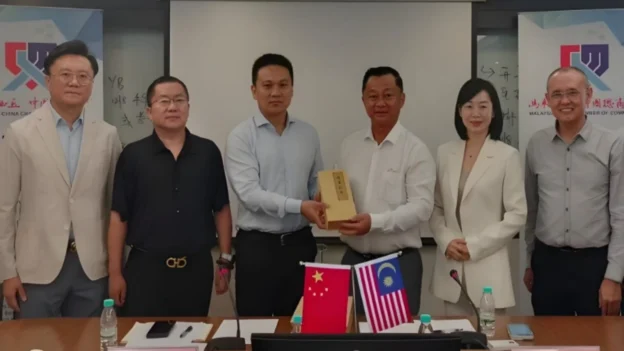
AllianPower Delegation Visits Malaysia-China Chamber of Commerce (MCCC), Achieving Practical Outcomes

Kuala Lumpur, September 23, 2005

​On the morning of September 23, the Qingdao Allian Power Delegation, together with China Council for the Promotion of International Trade – Shandong Provincial Sub-Council (CCPIT-Shandong) delegation,was invited to visit the Malaysia-China Chamber of Commerce (MCCC). The delegation was warmly welcomed by their Malaysian counterparts, leading to a candid, efficient, and highly fruitful communication.

The MCCC, headquartered in Kuala Lumpur and established in 1990, is an independent, non-governmental, non-profit, and multi-racial business association. Its mission is to build bridges for Malaysia-China economic and trade cooperation, promote bilateral trade and investment, and strengthen ties with governmental and business organizations in both countries, playing a vital role in facilitating commercial collaboration.

In his welcome address, Mr. Lim Chee Kiat, President of the MCCC Chapter, commended Shandong Province as a leading economic powerhouse in China, highlighting its forefront position in economic innovation, industrial production, intelligent machinery, agricultural development, industrial upgrading, and internationalization. Noting the long-standing and comprehensive cooperation between Malaysia and Shandong, he expressed confidence that enterprises from both sides will forge more collaborations under the new “Golden 50 Years” of China-Malaysia relations.

Mr. Chia Chong Seng, Secretary-General of the MCCC, thanked the CCPIT-Shandong delegation for their special visit, stating that their journey from Shandong demonstrated the high importance Shandong enterprises place on the Malaysian market. He affirmed that the chambers will deepen their cooperation to build a solid bridge for business collaboration between the two regions.

Ms. Zhang Yuanyuan, Central Committee Member and Vice Chairman of the International Business Committee of the MCCC, extended a sincere welcome to the Shandong delegation and provided a detailed introduction to the MCCC’s operations and structure. She reiterated the chamber’s commitment to working hand-in-hand with Chinese partners to foster enterprise-level cooperation.

Mr. Zhou Liang, head of the CCPIT-Shandong delegation, expressed sincere gratitude for the warm reception and briefed on the development status of Shandong’s key industries. Against the strategic backdrop of building a “high-level China-Malaysia community with a shared future,” as guided by the top leaders of both nations, he conveyed confidence that cooperation between Shandong and Malaysian enterprises in machinery manufacturing, equipment upgrading, and energy power will deepen and reach new heights.

Representatives from both sides engaged in targeted and in-depth discussions on industry development and future cooperation. The active and constructive dialogue enhanced mutual confidence and consensus, resulting in a series of concrete cooperative outcomes.

The meeting concluded with an exchange of commemorative gifts and a group photo.

The Qingdao Allian Power delegation, including Executive Vice President Mr. Eric Wu, Vice President and Chief Engineer Mr. Zhang Sijing, and Deputy Chief Engineer Mr. Kong Lingzhou, attended the exchange. New procurement intentions were confirmed with Malaysian partners during the event.

250kVA/200kW Diesel Generator (Cummins NT855-GA) APC200GF-1 | Allian Power

GENERATOR SET SPECIFICATIONS
Standby Power 250 kVA/200 kW
Prime Power 225 kVA/180 kW
Voltage 380/220V, 400/230V, 415/240V
Frequency 50 Hz
Speed 1500 rpm
ENGINE
Manufacturer Cummins
Engine Model NT855-GA
ALTERNATOR
Stamford UCDI274K14 200KW
Leroy Somer TAL-A46-D 200KW
Marathon MP-200-4A
Allian Power APF200 200kW
Type 100% Copper, Brushless, Self-Excited
Protection Class IP23 Protection
CONTROL SYSTEM & ENCLOSURE
Control Panel Manual/Autostart Optional, Brand: Deep Sea, SmartGen, ComAp
Construction Highly Corrosion Resistant Construction with Shock Absorbers
Enclosure Features Weatherproof & Soundproof Canopy with Integrated Fuel Tank & Exhaust Silencer

250kVA/200kW Diesel Generator (Cummins NT855-G1) APC200GF-2 | Allian Power

GENERATOR SET SPECIFICATIONS
Standby Power 250 kVA/200 kW
Prime Power 225 kVA/180 kW
Voltage 380/220V, 400/230V, 415/240V
Frequency 50 Hz
Speed 1500 rpm
ENGINE
Manufacturer Cummins
Engine Model NTA855-G1
ALTERNATOR
Stamford UCDI274K14 200KW
Leroy Somer TAL-A46-D 200KW
Marathon MP-200-4A
Allian Power APF200 200kW
Type 100% Copper, Brushless, Self-Excited
Protection Class IP23 Protection
CONTROL SYSTEM & ENCLOSURE
Control Panel Manual/Autostart Optional, Brand: Deep Sea, SmartGen, ComAp
Construction Highly Corrosion Resistant Construction with Shock Absorbers
Enclosure Features Weatherproof & Soundproof Canopy with Integrated Fuel Tank & Exhaust Silencer

275kVA/220kW Diesel Generator (Cummins QSM11-G1) APC220GF-1 | Allian Power

GENERATOR SET SPECIFICATIONS
Standby Power 275 kVA/220 kW
Prime Power 250 kVA/200 kW
Voltage 380/220V, 400/230V, 415/240V
Frequency 50 Hz
Speed 1500 rpm
ENGINE
Manufacturer Cummins
Engine Model QSM11-G1
ALTERNATOR
Stamford UCDI274K14 200KW
Leroy Somer TAL-A46-D 200KW
Marathon MP-200-4A
Allian Power APF220 220kW
Type 100% Copper, Brushless, Self-Excited
Protection Class IP23 Protection
CONTROL SYSTEM & ENCLOSURE
Control Panel Manual/Autostart Optional, Brand: Deep Sea, SmartGen, ComAp
Construction Highly Corrosion Resistant Construction with Shock Absorbers
Enclosure Features Weatherproof & Soundproof Canopy with Integrated Fuel Tank & Exhaust Silencer

275kVA/220kW Diesel Generator (Cummins QSNT-G6) APC220GF-2 | Allian Power

GENERATOR SET SPECIFICATIONS
Standby Power 275 kVA/220 kW
Prime Power 250 kVA/200 kW
Voltage 380/220V, 400/230V, 415/240V
Frequency 50 Hz
Speed 1500 rpm
ENGINE
Manufacturer Cummins
Engine Model QSNT-G6
ALTERNATOR
Stamford UCDI274K14 200KW
Leroy Somer TAL-A46-D 200KW
Marathon MP-200-4A
Allian Power APF200 200kW
Type 100% Copper, Brushless, Self-Excited
Protection Class IP23 Protection
CONTROL SYSTEM & ENCLOSURE
Control Panel Manual/Autostart Optional, Brand: Deep Sea, SmartGen, ComAp
Construction Highly Corrosion Resistant Construction with Shock Absorbers
Enclosure Features Weatherproof & Soundproof Canopy with Integrated Fuel Tank & Exhaust Silencer

275kVA/220kW Diesel Generator (Cummins NTA855-G1A) APC220GF-3 | Allian Power

GENERATOR SET SPECIFICATIONS
Standby Power 275 kVA/220 kW
Prime Power 250 kVA/200 kW
Voltage 380/220V, 400/230V, 415/240V
Frequency 50 Hz
Speed 1500 rpm
ENGINE
Manufacturer Cummins
Engine Model NTA855-G1A
ALTERNATOR
Stamford UCDI274K14 200KW
Leroy Somer TAL-A46-D 200KW
Marathon MP-200-4A
Allian Power APF200 200kW
Type 100% Copper, Brushless, Self-Excited
Protection Class IP23 Protection
CONTROL SYSTEM & ENCLOSURE
Control Panel Manual/Autostart Optional, Brand: Deep Sea, SmartGen, ComAp
Construction Highly Corrosion Resistant Construction with Shock Absorbers
Enclosure Features Weatherproof & Soundproof Canopy with Integrated Fuel Tank & Exhaust Silencer