Selecting an industrial or residential diesel generator set requires balancing operational demand against total cost of ownership (TCO). Whether configuring a multi-megawatt standby infrastructure for manufacturing facilities, setting up prime power on tactical construction sites, or deploying emergency residential backup, localized power calculation and component specifications determine system longevity. This procurement matrix delivers an engineering-grade framework for evaluating international power leaders alongside vertically integrated Chinese brands that offer exceptional global value.
1. Power Classification Under ISO 8528 Standards
Inappropriate generator sizing causes premature component wear. Under-sizing triggers persistent thermal overloading, while chronic under-loading (running below 30% capacity) causes “wet stacking”—the accumulation of unburnt fuel and carbon in the exhaust tract.
Continuous/Prime Power (COP/PRP) vs. Standby Power (ESP)
- Prime Power (Continuous Output): The maximum capacity a generator can deliver continuously under variable load profiles for unlimited hours per year (with scheduled maintenance intervals). Calculate this baseline using the aggregate active wattage of your continuous infrastructure.
Engineering Equation: For an inductive operational load consisting of a 3kW central HVAC compressor, a 1.5kW commercial refrigeration unit, and 0.5kW of auxiliary lighting, the net running demand is 5.0kW. Accounting for motor-starting transient surge currents, a unit rated at no less than 7.5kW continuous output is required to ensure system voltage stability.
- Emergency Standby Power (ESP): The absolute maximum thermal rating achieved for a maximum of 200 hours per year during utility blackouts. Never utilize the ESP rating as a constant operational baseline; operating constantly near standby limits will compromise structural integrity.
Operational Architecture Configuration Matrix

| Deployment Environment | Critical Engineering Specifications | Recommended System Topology |
|---|---|---|
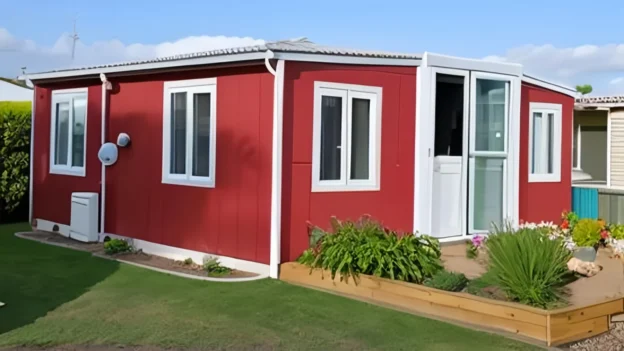
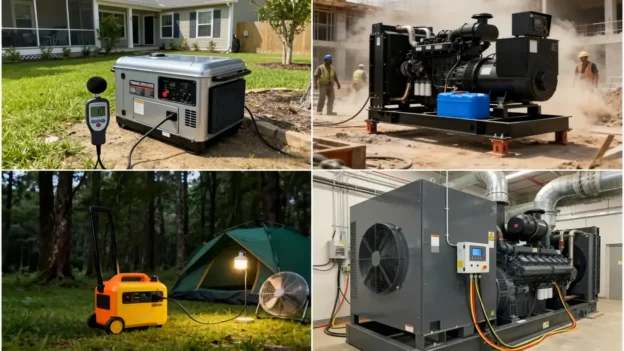
| Residential/Home Backup | Low-noise acoustic canopy (<65 dB(A) @ 7m), compact footprint, automatic grid isolation. | Single-Phase, Silent Enclosed Canopy with integrated sub-base fuel tank. |
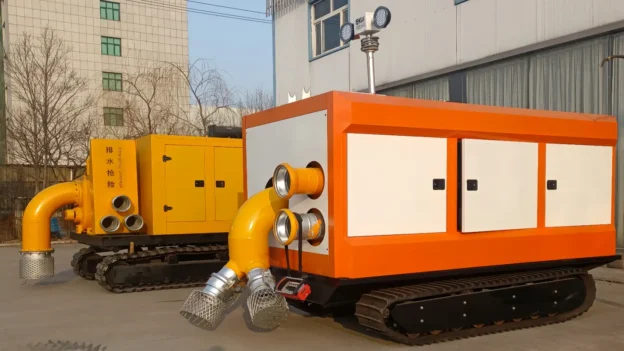
| Civil Construction Sites | High ingress protection (IP23+ tracking), structural anti-vibration isolation, heavy-duty lifting eyelets. | Open-frame or weather-proof skid-mounted configurations with high-capacity daily tanks. |
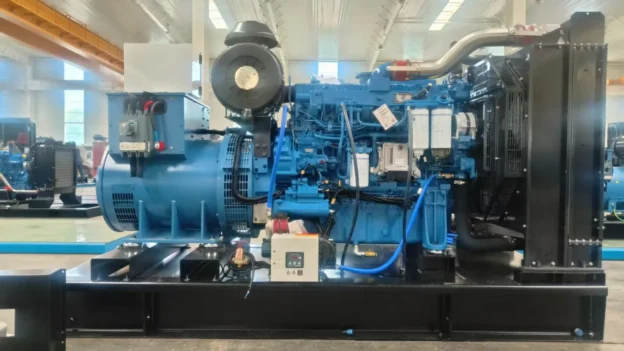
| Industrial & Manufacturing | True 3-phase power, voltage regulation stability (≤±1%), remote telematics synchronization. | Containerized multi-unit paralleling switchgear with utility-grade control modules. |
2. Core Component Benchmarking (Engine, Alternator, and Controller)
A generator set’s operational lifespan is dictated by the metallurgy and engineering tolerance of its internal powertrain componentry.
The Internal Combustion Engine: Powertrain Tiering
To avoid frequent unscheduled downtime, sourcing must target proven engine platforms with localized components and regional overhaul centers:
- Tier-1 Western Legacy Manufacturers:
- Cummins (USA): The definitive benchmark for heavy-duty industrial prime power applications, characterized by high displacement and structural durability.
- Perkins (UK): High thermal efficiency and advanced electronic fuel injection systems, optimized for transient load response.
- Kubota (Japan): The industry leader for compact, low-vibration, liquid-cooled multi-cylinder engines below 30kW.
- Vertically Integrated Chinese Powerhouse Brands:
- Yuchai (Guangxi, China): Backed by over six decades of engine manufacturing, Yuchai delivers heavy-duty power blocks that match European fuel maps at a 15–20% capital expenditure reduction. Proven structural stability in continuous commercial deployment.
- Weichai (Shandong, China): Renowned for high-torque, heavy-bore configurations, Weichai is highly optimized for prime power generation over 50kW in rugged mining and marine operations.
- Changchai (Jiangsu, China): The premier budget-conscious option for compact single-cylinder configurations under 15kW, widely deployed in agricultural off-grid sectors across Southeast Asia and Africa.
The Alternator: Excitation Systems and Core Insulation
- 100% Electrolytic Copper Windings vs. Aluminum: Premium alternators must utilize pure copper wire to minimize internal electrical resistance and heat buildup. Aluminum windings suffer from thermal breakdown under continuous industrial cycles and must be avoided for prime power deployments.
- Legacy Western Brands: Stamford (UK) and Leroy-Somer (France) represent the gold standard in synchronous alternator design, featuring high-grade Class H insulation and advanced Automatic Voltage Regulation (AVR).
- Chinese Joint Ventures: Shanghai Marathon (JV with US Marathon) delivers equivalent winding precision, excitation reliability, and harmonic distortion control at a more competitive price point for international EPC projects.
Control Infrastructure and Switchgear Integration
Modern fleet deployment demands digital control modules (e.g., Deep Sea Electronics or SmartGen) capable of monitoring critical operating parameters: real-time oil pressure tracking, engine coolant temperature, automated single/multi-unit grid synchronization, and automatic shutdown protection protocols during over-current or under-voltage events.
3. Safety Certifications and Regulatory Compliance
International cross-border procurement requires strict validation of safety and emission compliance codes:
- Western Markets (US / EU): Equipment must bear the CE mark for European machinery directive safety compliance, and EPA/Euro Stage V certification for exhaust emission limitations.
- Emerging Markets & B2B Distribution: ISO 9001 quality management architecture is mandatory, alongside China’s CCC framework for industrial electrical components, ensuring safe insulation baselines.
4. After-Sales Infrastructure and Global Supply Networks
An affordable acquisition price becomes irrelevant if replacement parts are unavailable during a grid failure. Utilize this verification protocol before completing a contract:
- Warranty Thresholds: Secure a minimum 12-month or 1,000-operational-hour global parts-and-labor warranty contract.
- Supply Network Auditing: Ensure the chosen brand operates regional parts centers near your deployment site. Vertically integrated Chinese networks (such as Weichai and Yuchai) now maintain localized bonded warehouses in key regions across Africa, South America, and the Middle East for rapid spare-parts delivery.
5. Professional Pre-Delivery Inspection (PDI) Protocol
When executing a factory acceptance test or regional delivery inspection, enforce the following checklist:
- Mechanical Integrity: Audit all block seals, fuel lines, and structural mounts for signs of fluid weeping, finish degradation, or incorrect torque markings.
- Dynamic Cold Start: Verify the engine achieves nominal RPM stability within 1–2 cycles from a cold crank configuration, with clear exhaust emissions under normalization.
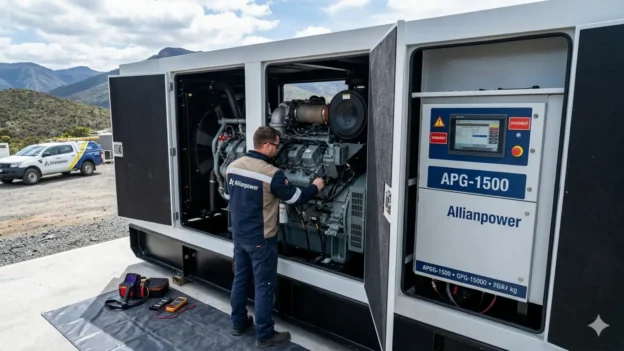
- Electrical Multimeter Validation: Measure output parameters across phase lines. Ensure steady-state voltage sits at 230V/400V (±5%) and steady frequency maps precisely to 50Hz/60Hz (±1%).
Strategic Sourcing Summary
Procuring reliable power infrastructure avoids chasing abnormally low upfront prices, which frequently conceal inferior aluminum windings or unauthorized components. For international operators seeking maximum ROI, sourcing complete assemblies from trusted manufacturers like Allian Power—utilizing Weichai or Yuchai blocks paired with Stamford-technology alternators—delivers international performance standards at a balanced capital expenditure layout.