作者归档:jzxadmin

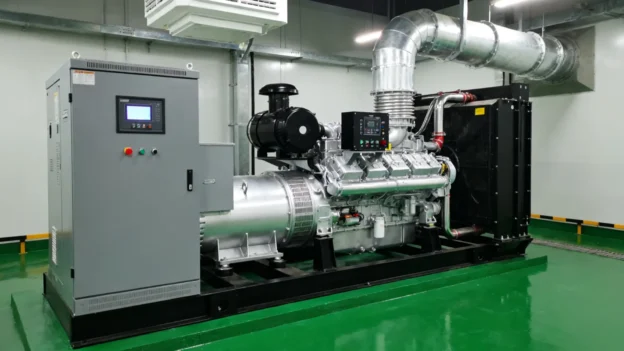
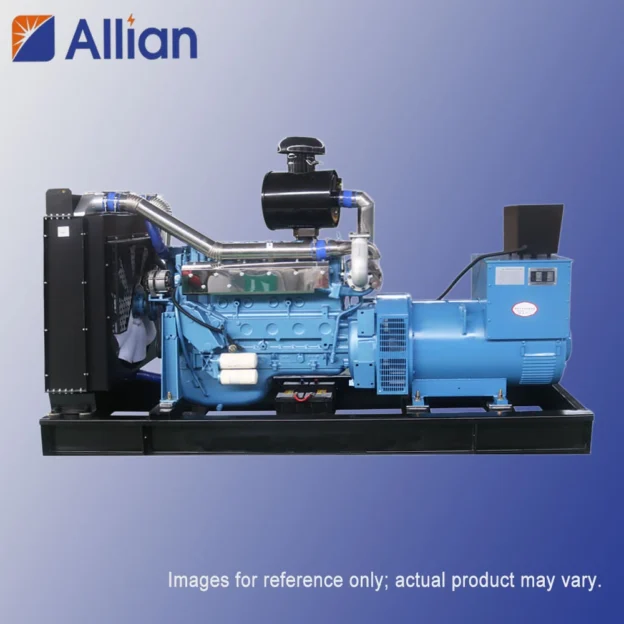
440kVA/352kW Diesel Generator (Weichai WP13D490E310) APW352GF-1 | Allian Power

GENERATOR SET SPECIFICATIONS
Standby Power 440 kVA/352 kW
Prime Power 400 kVA/320 kW
Voltage 380/220V, 400/230V, 415/240V
Frequency 50 Hz
Speed 1500 rpm
ENGINE
Manufacturer Weichai
Engine Model WP13D490E310
Stamford 400KW
Leroy Somer TAL-A473-C 400KW
Marathon MP-400-4
Allian Power APF350 350kW
Type 100% Copper, Brushless, Self-Excited
Protection Class IP23 Protection
CONTROL SYSTEM & ENCLOSURE
Control Panel Manual/Autostart Optional, Brand: Deep Sea, SmartGen, ComAp
Construction Highly Corrosion Resistant Construction with Shock Absorbers
Enclosure Features Weatherproof & Soundproof Canopy with Integrated Fuel Tank & Exhaust Silencer

Off-Grid Diesel Generator Water Pumps for Agriculture: Selection Guide

Off-grid agricultural production demands highly reliable, independent power solutions. In remote croplands, mountainous orchards, and emergency drought relief scenarios, relying on municipal grid extensions is often cost-prohibitive or physically impossible. Integrating heavy-duty diesel generators with high-volume water pumps bridges this infrastructure gap. This technical guide outlines system configuration, hydraulic matching equations, practical field scenarios, and the operational advantages of modern self-propelled irrigation machinery.

I. Core Engineering Components of Off-Grid Irrigation

An optimized diesel-driven pumping system requires matching thermal, electrical, and hydraulic sub-systems to maintain continuous fluid velocity without premature engine fatigue.

Component Group Primary Engineering Function Industrial Selection Baseline
Diesel Engine / Genset Converts chemical energy via diesel combustion into mechanical or electrical power for prime continuous duty. 20-500kW heavy-duty configurations (e.g., Cummins, Weichai, Yuchai engines) configured for variable field loads.
Hydraulic Water Pump Utilizes mechanical torque or electric current to spin industrial impellers, suctioning and pressurizing ground or surface water. High-efficiency centrifugal or submersible pumps ($Q = 20-1000\text{ m}^3\text{h}$, $H = 10-50\text{ m}$).
Electric Control & VFD Box Regulates startup currents, prevents line phase faults, and protects system internal circuits from electrical shock. Weatherproof distribution boxes featuring molded case circuit breakers (MCCB) and optional soft-starters.
Conveyance Pipeline Transports volume metrics from the water source directly to terminal field emitters under pressure. High-density polyethylene (HDPE) or PE lines (DN50-DN300) with reinforced industrial flanges.
Fuel Supply Reserve Ensures long-hour operation during critical crop watering periods without frequent refueling shutdowns. 20-1000L integrated or external tanks fitted with high-efficiency water-separator filtration.

II. Technical Matching: Hydraulic Calculations and Sizing

1. Water Pump Power Calculation

Determine the shaft power of the water pump through the formula based on farmland irrigation requirements (flow rate Q, head H):


Parameter Description:

  • a. Q: Flow rate (m³/h), determined by irrigation area and water application rate (e.g., 10m³/h per mu of land).
  • b. H: Head (m), needing to overcome terrain height + pipeline resistance (empirical formula: actual head = terrain height + 10% pipeline loss).
  • c. rho: Water density (1000kg/m³), g: Gravitational acceleration (9.8m/s²).
  • d. eta: Water pump efficiency (approximately 70%-85% for centrifugal pumps).

2. Generator Power Matching

  • The rated power of the generator P_Generator >= 1.2 x P_Water Pump, as the starting current of the water pump is 3-5 times the rated current, requiring a margin.
  • Example:
    • a. A farmland requires a flow rate of 50m³/h and a head of 30m, selecting a centrifugal pump (eta=75%):


It needs to be matched with a diesel generator >= 6.5kW (e.g., a 10kW model for sufficient buffer).

3. Pipe and Fitting Selection

  • Pipe diameter calculation: Select the pipe diameter D based on the flow rate Q, with the flow velocity controlled at 1.5-2.5m/s, formula:


(v is the flow velocity, m/s)

  • Case: When Q=50m³/h and v=2m/s, D is approximately 0.094m, select DN100 (4-inch) PE pipe.

III. Field Scenarios and Structural Configurations

Irrigation Topology Environmental Limitations Recommended Equipment Match Field Advantages
Mountainous Terraces Zero grid power, extreme vertical lift, variable terrain contours. 50-300kW high-capacity diesel genset + high-head centrifugal pump ($H = 40-60\text{ m}$) + integrated drip irrigation lines. Overcomes severe elevation head drops; saves up to $30\%-50\%$ water volume compared to open flood methods.
Large Plain Open Fields Massive horizontal distances, flat terrain, high volume requirements. 50-500kW diesel powertrain + large-bore centrifugal suction pump ($Q = 80-100\text{ m}^3/\text{h}$) + overhead impact sprinklers. Broad territorial coverage; a single industrial configuration efficiently manages 15-35 hectares.
Emergency Drought Mitigation Unpredictable river levels, high asset mobility requirements, rapid setup times. 30-200kW mobile trailer genset or high-clearance mobile pump truck equipped with lay-flat flexible hoses. Rapid deployment within hours; highly versatile asset for switching between threatened farm plots.

IV. Preventive Maintenance and Asset Lifecycle Optimization

Industrial diesel assets working in high-dust agricultural zones require structured maintenance schedules to prevent mechanical downtime during dry seasons.

Sub-System Service Interval Required Field Maintenance Critical Diagnostic Warnings
Diesel Engine Every 50 Hours Verify oil dipstick levels; clean primary air-intake element; inspect belt tension. Thick exhaust smoke, sudden RPM hunting, metallic valve clicking.
Centrifugal Pump Every 100 Hours Monitor shaft bearing temperature ($\le 70^\circ\text{C}$); clear impeller debris; check mechanical seal weeping. High structural vibration, drop in downstream pressure, continuous water packing leaks.
Electrical Panel Monthly Torque terminal wire lugs; test residual current device (RCD) tripping; blow out field dust accumulation. Nuisance breaker trips, voltage fluctuations, burnt insulation odor.
Fuel Train Every 200 Hours Flush low-point tank condensation; change primary 3-stage fuel/water separation filters. Hard cold-starting, engine surging, unexpected power derating.

V. Next-Generation Innovation: Crawler-Type Self-Propelled Pumping Units

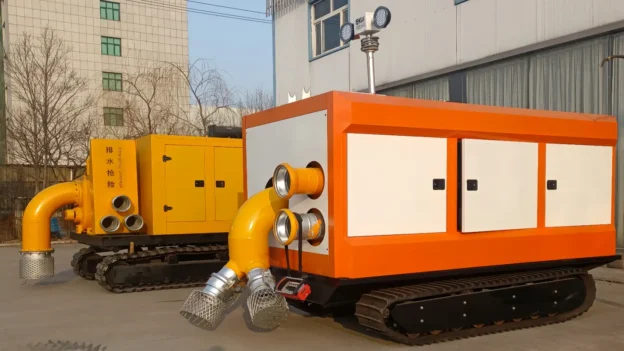
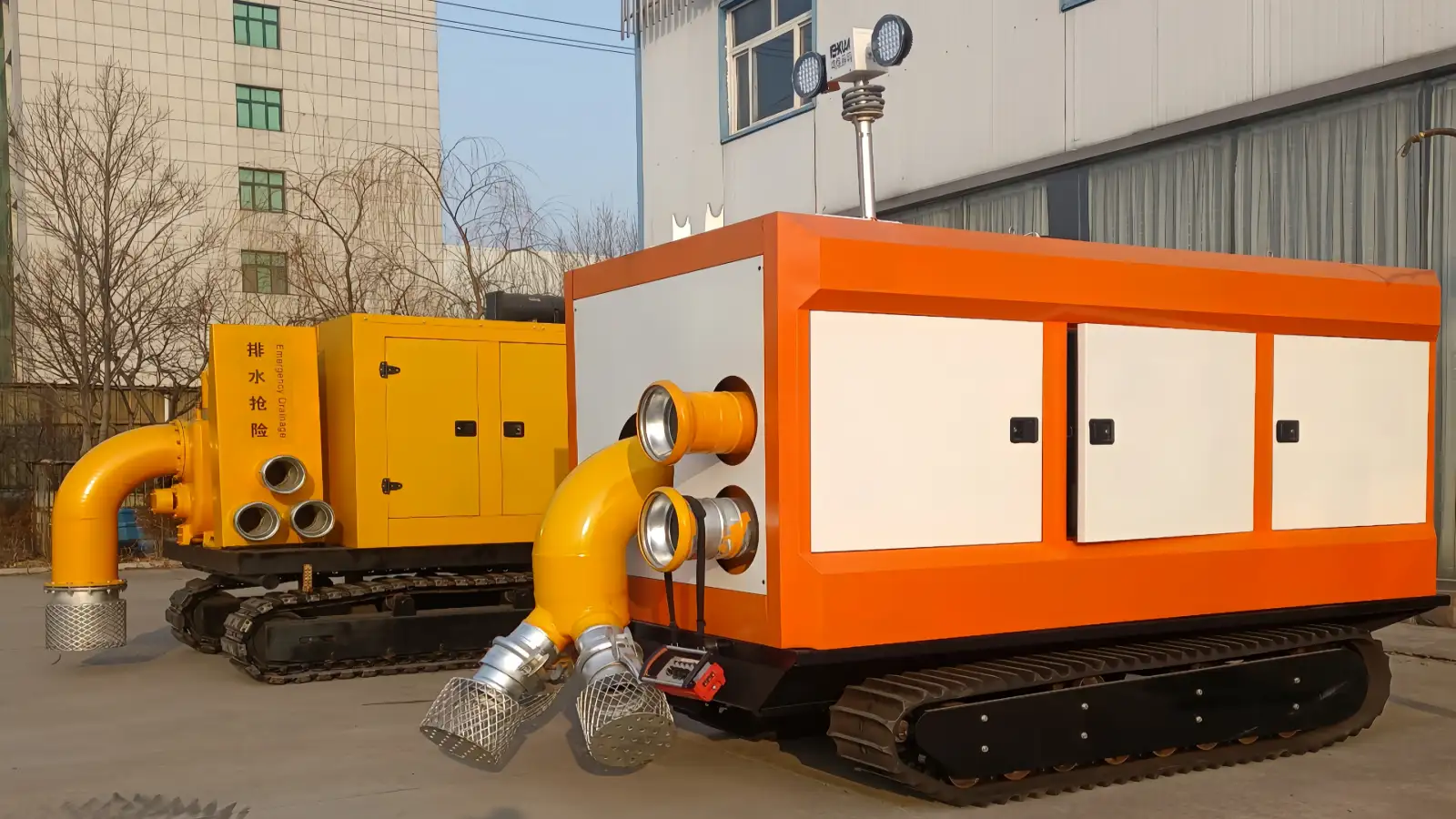
Traditional stationary generator sets restrict irrigation versatility, requiring extensive pipeline networks to cover disconnected fields. To eliminate this logistical bottleneck, Allian Power engineered the Crawler-Type Self-Propelled Generator and Pumping Unit.

This system integrates a high-torque diesel generator set and a commercial-grade water pump directly onto a heavy-duty tracked crawler chassis. Utilizing its high-clearance, cross-country track design, the self-propelled machine traverses mud, steep slopes, and soft agricultural soils effortlessly. By eliminating the reliance on fixed towing infrastructure or concrete pads, operators can move the pump intake directly along natural canals, rivers, or temporary reservoirs. This mobility reduces main pipeline investment, shortens setup times, and offers unprecedented drought-response capabilities for large-scale agricultural enterprises.

VI. Technical Advantages of Our Company

Allian power has newly developed a crawler-type self-propelled generator set water pump. This unit is an integrated agricultural irrigation equipment that uses a crawler chassis as a mobile carrier, equipped with a diesel generator set and a water pump system. It drives the water pump to pump water through the diesel generator, has cross-country walking capabilities, can flexibly shuttle through fields, does not rely on fixed power supplies, is suitable for mobile irrigation in water-scarce farmland, can quickly respond to the irrigation needs of different plots, and improves agricultural drought resistance efficiency.


Methanol Conversion for Gasoline Engines: Sizing & ECU Guide

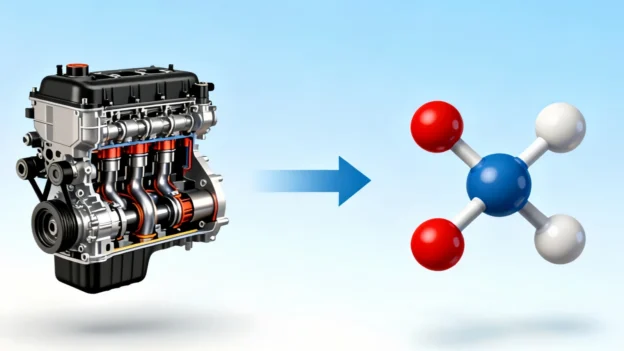
As industrial fleet operators and high-performance automotive engineers search for high-octane alternative fuels, methanol (CH₃OH) continuously emerges as a viable candidate. Often recognized as wood alcohol, methanol can be synthesized via natural gas, coal gasification, or biomass waste, positioning it as a strategically viable e-fuel option. However, running a standard, non-modified gasoline internal combustion engine on pure methanol introduces severe mechanical, thermal, and chemical challenges. This technical evaluation details the specific fuel properties, chemical constraints, and mandatory hardware modifications required for a successful conversion.

Chemical and Thermal Comparison Matrix

To evaluate why a factory-spec gasoline engine cannot directly burning methanol, engineers must examine the baseline chemical and thermodynamic profiles of both fuels:

Fuel Property & Metric Methanol (CH₃OH) Standard Gasoline Mechanical Implication for Engines
Lower Heating Value (LHV) ~19.7 MJ/kg ~44.4 MJ/kg Methanol yields roughly 45% of gasoline’s energy density
Stoichiometric Air-Fuel Ratio 6.4:1 14.7:1 Methanol requires more than double the fuel mass per air volume
Research Octane Number (RON) 108 – 114 91 – 98 Exceptional knock resistance; supports higher compression ratios
Latent Heat of Vaporization 1,103 kJ/kg 305 kJ/kg Significant intake cooling effect, but complicates cold-starting
Chemical Corrosiveness Highly Corrosive Stable / Non-Corrosive Attacks aluminum, zinc alloys, and standard elastomers

Three Systemic Failures of Direct Methanol Fueling

  1. Elastomer Degradation and Galvanic Corrosion: Methanol is highly hygroscopic and chemically aggressive. It rapidly degrades standard nitrile rubber (NBR) fuel hoses, pump seals, and O-rings, leading to catastrophic system leaks. Simultaneously, it dissolves the protective oxide layer on aluminum fuel rails and zinc-plated carburetors, causing severe pitting and injector clogging.
  2. The Critical Lean Out Condition: Because the stoichiometric air-fuel ratio drops from 14.7:1 (gasoline) down to 6.4:1 (methanol), a stock engine control system will experience a severe lean condition. Without mechanical adjustments, the fuel injectors cannot deliver the massive volume required, resulting in cylinder misfires, extreme exhaust gas temperatures (EGT), and imminent piston melting.
  3. Latent Heat Cold-Start Inability: Methanol’s latent heat of vaporization is nearly four times higher than gasoline. At temperatures below 15°C (59°F), the fuel fails to atomize and evaporate effectively within the intake port or cylinder, making cold starting virtually impossible without an auxiliary volatile priming agent.

Mandatory Engineering Modifications for Methanol Conversion

Transforming a standard gasoline architecture to safely and efficiently run on methanol requires comprehensive retrofitting across three primary vehicle sub-systems:

  • Fuel Delivery Hardware Upgrades: All soft rubber hoses must be replaced with fluoroelastomer synthetics (such as Viton) or polytetrafluoroethylene (PTFE) lined braided lines. Stainless steel or anodized aluminum fuel rails and tanks must be used to eliminate metallic corrosion.
  • High-Flow Fuel Pump and Injectors: Because the engine must process roughly 2.2 times more fuel by volume to maintain the equivalent thermal output, you must install high-impedance, oversized fuel injectors and a high-flow, methanol-compatible fuel pump.
  • ECU Remapping and Calibration: The Engine Control Unit requires a complete custom map. Engineers must scale the injection pulse width to accommodate the 6.4:1 target air-fuel ratio and advance the ignition timing to maximize the thermal benefits of methanol’s high octane rating.


Thermodynamic Sizing Calculation: Volumetric Fuel Demand

To illustrate the operational impact, let us calculate the exact volumetric fuel consumption increase after converting a vehicle that normally consumes 10 liters of gasoline per 100 kilometers:

  1. Gasoline Energy Density Profile: ~34.2 MJ/L
  2. Methanol Energy Density Profile: ~15.6 MJ/L
  3. Net Energy Consumption per 100 km: 10 L × 34.2 MJ/L = 342 MJ
  4. Required Methanol Volumetric Flow: 342 MJ ÷ 15.6 MJ/L ≈ 21.92 Liters

Consequently, the vehicle will require approximately 22 liters of methanol to cover the same 100-kilometer distance, causing a 120% increase in continuous volumetric fuel demand.

Engineering Trade-Off Evaluation

Technical Advantages Operational Challenges
Superior octane rating permits higher boost pressures and advanced ignition curves. Volumetric fuel consumption increases by over 120%, restricting driving range.
Massive latent heat lowers intake charge temperatures, increasing air density. Accelerated corrosive wear on non-treated metals and traditional rubber components.
Lower combustion temperatures significantly reduce nitrous oxide (NOx) emissions. Severe cold-starting difficulties in ambient temperatures below 15°C.

Technical Summary

Directly utilizing pure methanol in an unmodified gasoline internal combustion engine will result in chemical corrosion and severe mechanical failure. However, when paired with appropriate material upgrades, high-flow fuel delivery systems, and precise ECU recalibration, methanol serves as an exceptional high-performance alternative fuel. Given the complexities of managing chemical compatibility and precise air-fuel ratios, any conversion project should be executed in coordination with a certified automotive powertrain engineer.

Diesel Generator Procurement Guide: Sizing, Engine & Brands

Selecting an industrial or residential diesel generator set requires balancing operational demand against total cost of ownership (TCO). Whether configuring a multi-megawatt standby infrastructure for manufacturing facilities, setting up prime power on tactical construction sites, or deploying emergency residential backup, localized power calculation and component specifications determine system longevity. This procurement matrix delivers an engineering-grade framework for evaluating international power leaders alongside vertically integrated Chinese brands that offer exceptional global value.

1. Power Classification Under ISO 8528 Standards

Inappropriate generator sizing causes premature component wear. Under-sizing triggers persistent thermal overloading, while chronic under-loading (running below 30% capacity) causes “wet stacking”—the accumulation of unburnt fuel and carbon in the exhaust tract.

Continuous/Prime Power (COP/PRP) vs. Standby Power (ESP)

  • Prime Power (Continuous Output): The maximum capacity a generator can deliver continuously under variable load profiles for unlimited hours per year (with scheduled maintenance intervals). Calculate this baseline using the aggregate active wattage of your continuous infrastructure.

Engineering Equation: For an inductive operational load consisting of a 3kW central HVAC compressor, a 1.5kW commercial refrigeration unit, and 0.5kW of auxiliary lighting, the net running demand is 5.0kW. Accounting for motor-starting transient surge currents, a unit rated at no less than 7.5kW continuous output is required to ensure system voltage stability.

  • Emergency Standby Power (ESP): The absolute maximum thermal rating achieved for a maximum of 200 hours per year during utility blackouts. Never utilize the ESP rating as a constant operational baseline; operating constantly near standby limits will compromise structural integrity.

Operational Architecture Configuration Matrix

Deployment Environment Critical Engineering Specifications Recommended System Topology
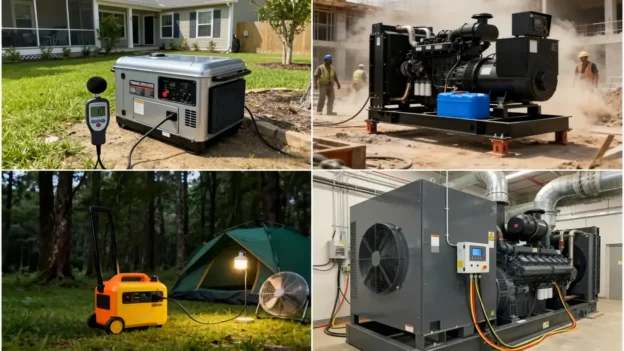
Residential/Home Backup Low-noise acoustic canopy (<65 dB(A) @ 7m), compact footprint, automatic grid isolation. Single-Phase, Silent Enclosed Canopy with integrated sub-base fuel tank.
Civil Construction Sites High ingress protection (IP23+ tracking), structural anti-vibration isolation, heavy-duty lifting eyelets. Open-frame or weather-proof skid-mounted configurations with high-capacity daily tanks.
Industrial & Manufacturing True 3-phase power, voltage regulation stability (≤±1%), remote telematics synchronization. Containerized multi-unit paralleling switchgear with utility-grade control modules.

2. Core Component Benchmarking (Engine, Alternator, and Controller)

A generator set’s operational lifespan is dictated by the metallurgy and engineering tolerance of its internal powertrain componentry.

The Internal Combustion Engine: Powertrain Tiering

To avoid frequent unscheduled downtime, sourcing must target proven engine platforms with localized components and regional overhaul centers:

  • Tier-1 Western Legacy Manufacturers:
    • Cummins (USA): The definitive benchmark for heavy-duty industrial prime power applications, characterized by high displacement and structural durability.
    • Perkins (UK): High thermal efficiency and advanced electronic fuel injection systems, optimized for transient load response.
    • Kubota (Japan): The industry leader for compact, low-vibration, liquid-cooled multi-cylinder engines below 30kW.
  • Vertically Integrated Chinese Powerhouse Brands:
    • Yuchai (Guangxi, China): Backed by over six decades of engine manufacturing, Yuchai delivers heavy-duty power blocks that match European fuel maps at a 15–20% capital expenditure reduction. Proven structural stability in continuous commercial deployment.
    • Weichai (Shandong, China): Renowned for high-torque, heavy-bore configurations, Weichai is highly optimized for prime power generation over 50kW in rugged mining and marine operations.
    • Changchai (Jiangsu, China): The premier budget-conscious option for compact single-cylinder configurations under 15kW, widely deployed in agricultural off-grid sectors across Southeast Asia and Africa.

The Alternator: Excitation Systems and Core Insulation

  • 100% Electrolytic Copper Windings vs. Aluminum: Premium alternators must utilize pure copper wire to minimize internal electrical resistance and heat buildup. Aluminum windings suffer from thermal breakdown under continuous industrial cycles and must be avoided for prime power deployments.
  • Legacy Western Brands: Stamford (UK) and Leroy-Somer (France) represent the gold standard in synchronous alternator design, featuring high-grade Class H insulation and advanced Automatic Voltage Regulation (AVR).
  • Chinese Joint Ventures: Shanghai Marathon (JV with US Marathon) delivers equivalent winding precision, excitation reliability, and harmonic distortion control at a more competitive price point for international EPC projects.

Control Infrastructure and Switchgear Integration

Modern fleet deployment demands digital control modules (e.g., Deep Sea Electronics or SmartGen) capable of monitoring critical operating parameters: real-time oil pressure tracking, engine coolant temperature, automated single/multi-unit grid synchronization, and automatic shutdown protection protocols during over-current or under-voltage events.

3. Safety Certifications and Regulatory Compliance

International cross-border procurement requires strict validation of safety and emission compliance codes:

  • Western Markets (US / EU): Equipment must bear the CE mark for European machinery directive safety compliance, and EPA/Euro Stage V certification for exhaust emission limitations.
  • Emerging Markets & B2B Distribution: ISO 9001 quality management architecture is mandatory, alongside China’s CCC framework for industrial electrical components, ensuring safe insulation baselines.

4. After-Sales Infrastructure and Global Supply Networks

An affordable acquisition price becomes irrelevant if replacement parts are unavailable during a grid failure. Utilize this verification protocol before completing a contract:

  • Warranty Thresholds: Secure a minimum 12-month or 1,000-operational-hour global parts-and-labor warranty contract.
  • Supply Network Auditing: Ensure the chosen brand operates regional parts centers near your deployment site. Vertically integrated Chinese networks (such as Weichai and Yuchai) now maintain localized bonded warehouses in key regions across Africa, South America, and the Middle East for rapid spare-parts delivery.

5. Professional Pre-Delivery Inspection (PDI) Protocol

When executing a factory acceptance test or regional delivery inspection, enforce the following checklist:

  1. Mechanical Integrity: Audit all block seals, fuel lines, and structural mounts for signs of fluid weeping, finish degradation, or incorrect torque markings.
  2. Dynamic Cold Start: Verify the engine achieves nominal RPM stability within 1–2 cycles from a cold crank configuration, with clear exhaust emissions under normalization.
  3. Electrical Multimeter Validation: Measure output parameters across phase lines. Ensure steady-state voltage sits at 230V/400V (±5%) and steady frequency maps precisely to 50Hz/60Hz (±1%).

Strategic Sourcing Summary

Procuring reliable power infrastructure avoids chasing abnormally low upfront prices, which frequently conceal inferior aluminum windings or unauthorized components. For international operators seeking maximum ROI, sourcing complete assemblies from trusted manufacturers like Allian Power—utilizing Weichai or Yuchai blocks paired with Stamford-technology alternators—delivers international performance standards at a balanced capital expenditure layout.

Diesel Generator Room Design: Sizing, Ventilation & Foundation

The design of a diesel generator room involves multiple disciplines and links, so its layout requires strict adherence to a set of principles and standards. These standards are critical to ensuring the safe, stable, and efficient operation of equipment, as well as the safety of personnel and the environment. Importantly, the rational layout of a diesel generator room is not just about complying with norms—it brings a series of tangible and vital benefits, which can be summarized into four core values: safety, reliability, economy, and environmental protection. In this article, Allianpower will sort out the layout principles, standard requirements, and practical benefits of diesel generator room design.

I. Key Points for Diesel Generator Room Design

1. Layout Principles

  • Safety First: This is the most fundamental and important principle, covering fire prevention, explosion prevention, electric shock prevention, exhaust gas poisoning prevention, noise hazard prevention, and other aspects.
  • Ease of Operation and Maintenance: The equipment layout should reserve sufficient space for operation, maintenance, and inspection—especially around the unit, at the radiator end, and in front of the power distribution panel. Consider the transportation channel for large equipment; if necessary, reserve hoisting holes or install bridges.
  • Optimized Operating Environment: The focus is on ventilation, heat dissipation, and temperature reduction. Good ventilation is key to ensuring the rated output and service life of the unit. Avoid air short-circuiting to ensure that fresh air can fully enter and hot air can be smoothly discharged.
  • Minimizing Environmental Impact: Control external noise through effective sound insulation and silencing measures; reduce exhaust pollution through high-altitude emission and potential exhaust gas purification treatments.

2. Practical Tips for Equipment Selection and Capacity Control

  • Unit Selection: Prioritize products with small overall size, light weight, and few auxiliary equipment. Pay attention to the room height and the channels for installation, maintenance, and transportation. Generally, air-cooled units can be selected. It is also necessary to consider the impact of the unit’s installation environment, climate, altitude, and other factors on its capacity, and take appropriate correction coefficients according to the product technical specifications.
  • Ways to Reduce Diesel Generator Capacity: Optimize load demand through consultation with relevant disciplines. For example, negotiate with the fire protection discipline to minimize the motor capacity of fire pumps while meeting fire water demand; adopt step-down starting for large-power asynchronous motors; adjust the starting sequence as much as possible—start large-capacity equipment first, then start small-capacity equipment in sequence, and finally connect other loads with no impact.

3. Multi-Disciplinary Collaboration and Considerations

  • The design and layout of a diesel generator room require close cooperation among multiple disciplines, including architecture, structure, electrical engineering, HVAC (heating, ventilation, and air conditioning), water supply and drainage, and power. Electrical engineers put forward requirements, and other disciplines complete their respective design tasks accordingly.
  • All designs must comply with the latest national and local standards and specifications. This article is based on the collation of existing search results, but standards may be updated—be sure to check the latest version.
  • Specific projects may have their own particularities and additional requirements. During design, apply standards flexibly and conduct full communication and confirmation with relevant authorities (such as fire protection, environmental protection, and power supply departments).

Table 1: Core Design Dimensions and Key Points of Diesel Generator Rooms

Design Dimension Core Requirements & Key Points
Building Location Preferably located on the first floor or basement 1st/2nd floor; avoid being adjacent to or above/below densely populated areas; should not be located directly below or adjacent to areas prone to water accumulation.
Fire Separation Adopt fire partitions with fire resistance rating ≥2h + non-combustible floors with fire resistance rating ≥1.5h; Grade A fire doors; the oil storage room and generator room shall be separated by fire partitions with fire resistance rating ≥3h, and the door shall be a Grade A fire door (opening towards the generator room).
Equipment Layout Meet the requirements for equipment operation, maintenance, and ventilation; set up a control room according to capacity (recommended for units >500kW); ensure smooth air exhaust from the radiator; minimize elbows in the exhaust pipe, insulate the pipe, and drain water at low points; ensure equipment spacing and channel width meet requirements.
Oil Storage Room Total oil storage capacity ≤1m³ (for fire protection); use explosion-proof lamps and electrical appliances; sealed oil tanks with vent pipes led outdoors and breathing valves with flame arresters; anti-leakage and anti-oil spreading measures for the ground and trenches.
Ventilation & Exhaust Good air intake and exhaust (air inlets should be directly opposite the generator end or on both sides); insulate the exhaust pipe (surface temperature ≤50ºC); discharge exhaust gas at high altitude to areas not affecting personnel and the environment; mechanical ventilation and emergency exhaust shall be considered for underground rooms.
Environmental Protection (Noise/Exhaust) Conduct sound absorption and insulation treatment inside the room; install high-efficiency silencers on the exhaust pipe; perform silencing treatment on outdoor air outlets and inlets; ensure that the on-site noise meets standards; exhaust gas emission complies with environmental protection requirements.
Electrical & Lighting Use fire-resistant copper-core cables for power distribution lines; reliable grounding (grounding resistance ≤4Ω); anti-static grounding for the oil storage room; standby lighting and emergency lighting (illumination shall be 200Lx and 100Lx respectively).
Fire Protection & Alarm Install an automatic fire alarm system (temperature-sensitive detectors are preferred); install a gas fire extinguishing system (e.g., heptafluoropropane); set up a dedicated fire telephone extension; equip with mobile fire extinguishers.
Water Supply & Drainage The cooling water system shall meet water quality requirements; closed circulation systems shall be equipped with high-level expansion tanks; install hand basins and floor-mounted sinks in the room; trenches shall have drainage and oil discharge measures (0.3% slope).

II. Benefits of Rational Diesel Generator Room Layout

1. Enhanced Safety and Reliability

This is the most fundamental and important benefit. A rational layout directly determines whether the room can operate safely and stably in emergency situations.

  • Personnel Safety Guarantee: Strict fire separation (fire walls, fire doors), reliable exhaust gas emission systems (preventing carbon monoxide accumulation), and effective noise prevention measures jointly ensure the personal safety of operation and maintenance personnel and nearby residents, avoiding occupational risks such as poisoning and hearing damage.
  • Equipment Safety Guarantee: A good layout provides a suitable operating environment for equipment. Sufficient air intake and exhaust prevent the generator from load reduction or shutdown due to overheating; reasonable spacing avoids overcrowding of equipment, facilitating daily inspection and maintenance and timely detection of potential problems.
  • Emergency Power Supply Reliability: When the municipal power supply is interrupted, a reasonably designed room ensures that the generator starts quickly, switches seamlessly, and continuously supplies power to critical loads (such as fire elevators, emergency lighting, data center servers, etc.) until the municipal power supply is restored. This is the ultimate goal of the entire emergency power supply system.

2. Optimized Operational Efficiency and Economy

A rational layout can significantly reduce the long-term operation and maintenance costs of the room.

  • Improved Power Generation Efficiency: Diesel generators achieve the highest efficiency at rated operating temperatures. Excellent ventilation and heat dissipation design can effectively control the room temperature within the ideal range, avoiding efficiency reduction and insufficient output power of the unit due to overheating, thereby saving fuel consumption.
  • Reduced Fuel Costs: Improved efficiency directly means less diesel is needed to generate the same amount of electricity, which is a considerable saving in the long run.
  • Lower Maintenance Costs: A clean, dry, and well-ventilated environment reduces the erosion of dust and moisture on the engine, control system, and radiator, extending equipment service life and reducing failure rates and the frequency of parts replacement.
  • Avoidance of Fines and Rectification Costs: Compliance with environmental protection (noise, exhaust gas) and fire protection standards avoids penalties and expensive later transformation costs due to violations.

3. Ease of Operation and Maintenance

A rational spatial layout is most user-friendly for operation and maintenance personnel.

  • Sufficient Operation Space: Reserve sufficient maintenance channels around the equipment, in front of the power distribution panel, and at the radiator end, facilitating daily operations, instrument reading, fault diagnosis, and maintenance work, and improving work efficiency.
  • Convenient Equipment Replacement: Consider equipment transportation channels (such as hoisting holes, sufficiently wide doors), making it possible to replace large components (such as engines, generator bodies) or the entire unit in the future without large-scale destructive transformation of the building.
  • Simplified Inspection Routes: Clear channels and reasonable equipment arrangement make daily inspection routes shorter and smoother, with no dead ends, making it easy to detect problems such as leakage.

4. Compliance with Environmental Protection and Regulatory Requirements

This is a necessary condition for the project to pass acceptance and obtain permits.

  • Noise Control: Through sound insulation and silencing measures, control the operating noise and exhaust noise of the unit within the limits required by environmental protection regulations, avoiding disturbance to the surrounding environment (such as office buildings, hospitals, residential areas).
  • Compliant Exhaust Emission: Design the exhaust pipe reasonably to ensure high-altitude emission and sufficient diffusion of exhaust gas; cooperate with necessary treatment devices to meet air pollutant emission standards.
  • Pollution Prevention: Anti-leakage design and drainage/oil discharge measures in the oil storage room effectively prevent soil and groundwater pollution caused by diesel leakage.

5. Maximized Space Utilization and Overall Coordination

This is particularly important in urban buildings where space is expensive.

  • Compact and Efficient: On the premise of meeting all safety spacing and operation requirements, minimize the total area required by the room through refined design, freeing up valuable space for other functional areas.
  • Seamless Integration with the Building: Rational site selection and layout (such as the location of air inlets, air outlets, and exhaust ports) can better integrate with the building’s facade and internal circulation, reducing negative impacts on the building’s appearance and functional layout.

Table 2: Comparison Between Rational and Irrational Diesel Generator Room Layout

Aspect Benefits of Rational Layout Potential Risks of Irrational Layout
Safety Eliminates fire, explosion, and poisoning hazards Major safety hazards exist, threatening life and property safety
Reliability 100% reliable start-up and power supply in emergencies Possible failure to start, overheating shutdown, and power supply interruption
Economy High operating efficiency, low maintenance costs, and long service life High fuel consumption, frequent failures, expensive maintenance, and shortened service life
Environmental Protection Compliant noise and exhaust emission, no complaints or fines Continuous environmental complaints, facing penalties and rectification
Operation & Maintenance Easy operation, convenient maintenance, and easy equipment replacement Cramped space, inability to perform maintenance, and need to demolish walls for equipment replacement

III. Basic Installation Content of Diesel Generator Rooms

When installing a generator set, the main factors to consider include the floor load-bearing capacity, channels and maintenance space, vibration, ventilation, exhaust pipe connection and insulation, noise reduction, fuel tank size and location—all in accordance with local or national environmental protection regulations.

1. Foundation and Installation

  • Anti-Vibration Devices: For Cummins series diesel generator sets, high-efficiency anti-vibration devices are pre-installed, which can eliminate approximately 85-90% of the unit’s vibration. At the same time, the unit is equipped with bellows for exhaust system installation when leaving the factory, which are used to isolate the unit’s vibration from the exhaust system. During installation, users should take necessary anti-vibration measures simultaneously, such as using flexible connections for output cable connections, adopting elastic bell mouth air guide grooves for air outlets, and elastic hoisting for the exhaust system.
  • Foundation Requirements: Cummins series units have excellent anti-vibration performance, so no specific foundation is required for the generator set. The unit can be directly installed on a horizontal and sufficiently strong concrete floor. The floor should be horizontal and flat (flatness requirement within a 0.5º plane) and must be able to bear 1.5-2 times the static weight of the generator set.
  • Foundation Size Calculation: If the floor in the room cannot meet the load-bearing requirements, a concrete foundation can be used for installation. This is a simple, reliable, and low-cost installation method. The specific method is shown in Figure 1 and Figure 2. The thickness of the machine base can be designed and calculated according to the following formula:
FD = W/(D×B×L) —— (Formula 1)
  • FD: Thickness of the machine base (m)
  • W: Total wet weight of the generator set (Kg)
  • D: Concrete density (2,403 Kg/m³)
  • B: Width of the machine base (m)
  • L: Length of the machine base (m)

The concrete foundation should usually be 100-200mm higher than the ordinary floor to form a base. When pouring the concrete foundation platform, ensure that the concrete foundation is horizontal and that the foundation platform has sufficient capacity to bear the generator set.

Diesel generator room concrete foundation construction diagram with bolt installation, equipment layout, ventilation, and exhaust system details

2. Layout Considerations for Diesel Generator Rooms

The conventional layout of a diesel generator room is shown in Figure 3 and Figure 4.

  • The diesel generator room must have sufficient space to allow free air circulation, which is very important for ensuring the normal performance of the unit, reducing the power loss of the unit, and ensuring the normal service life of the unit. No other flammable and explosive materials, or objects that may be drawn into the unit’s protective net or directly sucked into the unit body and affect the normal use of the unit, should be placed inside the room.
  • For the installation of units without special requirements, the design requirements for the room are not high. It only needs to ensure that the air inlets and outlets of the room meet the technical specifications (on the premise that the exhaust back pressure does not exceed the specified value), avoid hot air backflow, and reserve sufficient operation and maintenance space inside the room.
  • For some rooms that need to make and place backup fuel tanks inside, attention should be paid to isolating them from the main space of the room and meeting the requirements of local environmental protection and fire protection departments.
  • The room should be equipped with sufficient air inlets and outlets. If the cooling capacity of air intake and exhaust is insufficient, an additional exhaust duct should be installed or a remote water tank installation method should be adopted. When selecting the specific placement position of the diesel generator set in the room, priority should be given to reserving sufficient operation and maintenance space and air circulation space around and above the unit.
  • When supporting facilities such as an automatic transfer switch (ATS) system or a synchronous parallel operation system are installed in the room, sufficient operation and maintenance space should be reserved around the equipment.

Conclusion

In summary, the rational layout of a diesel generator room is an investment with extremely high returns. It may require more design thinking and coordination in the early stage, but in return, it brings safety, peace of mind, cost savings, and reliability throughout the building’s life cycle. It ensures that this “last lifeline” is absolutely trustworthy at critical moments. We hope this information will help you fully understand the layout principles and standard requirements of diesel generator rooms. If you have more specific application scenarios (such as a specific type of building) or in-depth questions about a certain detail, Allianpower is willing to provide further information.

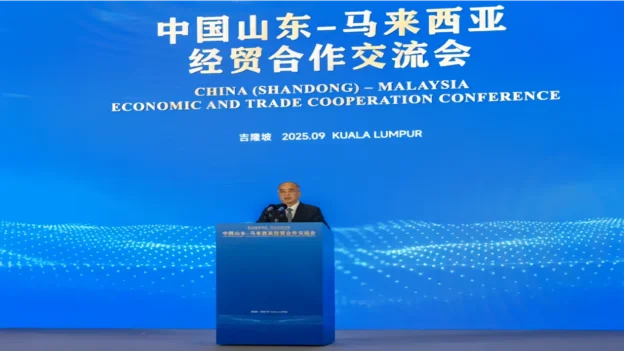
AllianPower attend China (Shandong) – Malaysia Economic and Trade Cooperation Conference Held in Kuala Lumpur

KUALA LUMPUR, September 23, 2025​ – The China (Shandong) – Malaysia Economic and Trade Cooperation Exchange Meeting was successfully convened at W Hotel in Kuala Lumpur, Malaysia.


The event featured addresses and speeches by distinguished guests including Mr. Lin Wu, Secretary of the Shandong Provincial Committee of the Communist Party of China and Director of the Standing Committee of the Shandong Provincial People’s Congress; Mr. Fan Bo, Standing Committee Member of the Shandong Provincial Party Committee and Secretary-General; Mr. Zheng Xuefang, Chargé d’Affaires ad interim of the Embassy of the People’s Republic of China in Malaysia; YB Mr. Chang Lih Kang, Minister of Science, Technology and Innovation of Malaysia; Tan Sri Dato’ Sri Dr. Low Kian Chuan, Chairman of the Malaysia-China Business Council; Mr. Rashidi Said, Senior Director of the Bilateral Economic Relations Division, Ministry of Investment, Trade and Industry of Malaysia; and Dato’ Ng Yek Pyu, President of the Associated Chinese Chambers of Commerce and Industry of Malaysia. Senior officials from relevant cities in Shandong Province and heads of relevant provincial departments also attended the meeting.

This Conference was a significant event during the Shandong Economic and Trade Delegation’s visit to Malaysia. Mr Zhang Sijing, President & Chief Engineer of Allian Power, Mr. Eric Wu, Vice President & International Director of Allian Power, was honored to be invited to participate and represented Allian Power in a signing ceremony with a Malaysian partner company.

In his speech, Mr. Zheng Xuefang, Chargé d’Affaires ad interim of the Chinese Embassy in Malaysia, stated that Shandong is not only a crucial cradle of Chinese civilization but also one of China’s most economically dynamic provinces. He highlighted Shandong’s robust industrial foundation and comprehensive range of manufacturing sectors, with “Shandong Manufacturing” and “Shandong Creation” gaining global recognition. Noting the vitality of Shandong’s outward-oriented economy and Malaysia’s role as a key regional hub for trade and investment, Mr. Zheng emphasized the shared commitment of both sides to seeking development through openness and mutual benefit through cooperation, characterizing them as strong partners in the Belt and Road Initiative. He described the collaboration between Shandong and Malaysia as a partnership for industrial upgrading and kinetic energy conversion, an alignment of the principles of open cooperation and mutual benefit, and a dialogue between the birthplace of Confucian civilization and a significant representative of Islamic civilization. With this year marking the beginning of a new “Golden 50 Years” for China-Malaysia relations, Mr. Zheng expressed confidence that Shandong-Malaysia cooperation is poised to embrace new opportunities. He encouraged more Shandong enterprises to invest in Malaysia and welcomed more Malaysian businesses to explore opportunities in Shandong.

Mr. Lin Wu, Secretary of the Shandong Provincial Party Committee, noted that economic and trade ties between Shandong and Malaysia are growing increasingly close, with Malaysia having become Shandong’s largest trading partner within ASEAN. He expressed Shandong’s willingness to work with Malaysia to deepen collaboration in industrial and supply chains, continuously expand two-way investment, and strengthen cooperation in sectors such as chemicals, energy, and electronic information. He also proposed exploring broader trade markets by vigorously developing new forms of business like cross-border e-commerce to cultivate more growth points; jointly enhancing maritime cooperation advantages by strengthening collaboration in port construction, marine transportation, and marine industry synergy and innovation to bolster the blue economy; and enhancing cooperation in emerging fields by actively aligning with Malaysia’s strategies such as its digital plan and energy transition, deepening collaboration in artificial intelligence, integrated circuits, and clean energy development, thereby injecting strong momentum into each other’s development.

YB Mr. Chang Lih Kang, Minister of Science, Technology and Innovation of Malaysia, emphasized Malaysia’s commitment to driving energy transition and sustainable growth, actively developing its hydrogen economy, renewable energy technologies, and biotechnology. He expressed hope that both sides would strengthen cooperation in advanced materials, smart agriculture, and aquaculture, combining Malaysia’s innovation ecosystem with Shandong’s industrial strengths to contribute to sustainable development for both countries and the region.

Allian Power has always placed high importance on cooperation and development within the ASEAN region, particularly in Malaysia. Over the years, the company has provided product resources – including power machinery, energy equipment, diesel generators, gas generators, and power engine, agricultural equipment – to dozens of Malaysian clients. These products align with Shandong’s key industrial strengths and have earned a strong reputation among clients both domestically and internationally, making a unique contribution to Shandong-Malaysia commercial cooperation. In recent years, Allian Power has actively seized opportunities presented by national strategies like the Belt and Road Initiative and RCEP. Through global layout and industrial synergy, the company has promoted the export of its products and services to over 60 countries and regions worldwide, achieving healthy development through integrated domestic and international cycles. Moving forward, Allian Power will adopt a broader global perspective, proactively seize opportunities arising from economic transformation and innovation-driven development, further accelerate its “Going Global” strategy, continuously expand its business coverage, foster new competitive advantages in international cooperation, explore new spaces for international collaboration, and actively contribute to promoting high-quality development of the Belt and Road Initiative.

The China (Shandong) – Malaysia Economic and Trade Cooperation Conference was organized by the Shandong Provincial People’s Government, the Ministry of Investment, Trade and Industry of Malaysia, and the Malaysia-China Business Council. It was undertaken by the Department of Commerce of Shandong Province, and co-organized by the National Chamber of Commerce and Industry of Malaysia, the Associated Chinese Chambers of Commerce and Industry of Malaysia, and the Malaysia China Enterprises Association. The Conference attracted over 400 participants from relevant government departments, business associations, and key enterprises of both countries. Adhering to the principle of “pragmatic engagement,” the meeting successfully worked towards further expanding cooperation scale in emerging areas such as agricultural product deep processing and green energy.

This Conference has opened a new window of cooperation between Shandong and Malaysia, facilitating the progression of sub-national collaboration from conceptual exchange to strategic alignment. It is anticipated that more practical outcomes will be achieved in the future across industrial, economic, trade, and people-to-people domains.

Cummins Diesel Generator Cooling System Maintenance & Coolant Guide

Cummins diesel generator sets primarily utilize a closed-loop liquid cooling system equipped with a built-in, engine-driven fan. Maintaining precise temperature control within this circuit is critical to preventing thermal stress, reducing component wear, and ensuring uninterrupted power deployment.

A standard Cummins cooling loop comprises several heavy-duty components working in tandem:

  • Water pump and internal cylinder block cooling jackets
  • Thermostat and bypass piping
  • Radiator core, heavy-duty hoses, and lines
  • Oil cooler and integrated coolant filters (on specified models)


For custom or non-standard configurations (such as remote cooling systems), the traditional radiator is replaced by a high-efficiency heat exchanger, accompanied by a surge tank and a remote cooling fan. Technical Note: If the remote fan is installed at a high elevation, a transition expansion tank must be integrated into the loop to mitigate excessive internal pressure and protect the heat exchanger core from structural fatigue.

CRITICAL NOTICE: Airborne dust, grease, and debris adhering to the radiator fins will drastically impair thermal dissipation. In high-dust environments, regular radiator core flushing is mandatory to prevent engine overheating.

1. Coolant Specifications & Selection Criteria

Engine coolant is not just “water”—it serves three vital engineering functions:

  1. Maximizes heat transfer capacity across all operational loads.
  2. Prevents cavitation erosion and chemical corrosion on internal metallurgy and elastomeric seals.
  3. Provides robust anti-freezing protection in extreme climates.

Water Quality & Antifreeze Blending

  • Water Standards: The base water must have a stable pH value between 6 and 8. Distilled or deionized water is highly recommended to prevent scale buildup.
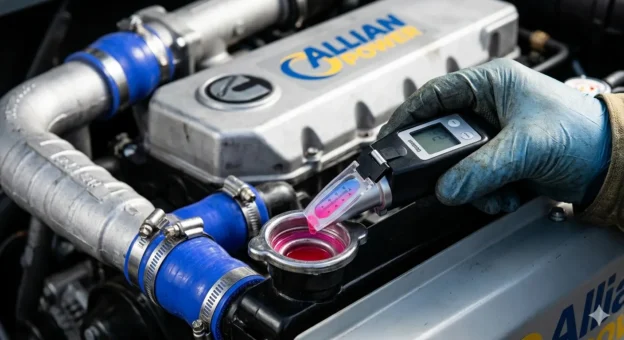
  • Freezing Climates: In cold regions, a premixed antifreeze solution matching the local minimum ambient temperature is required. Always blend the water and ethylene glycol evenly in a separate container before pouring it into the radiator to eliminate thermal stratification. High-quality antifreeze also raises the boiling point, preventing “boil-over” during peak load periods.
  • Non-Freezing Climates: In tropical or temperature-controlled environments, a dedicated rust inhibitor can substitute for antifreeze. This maximizes thermal efficiency while protecting internal water jackets. After the initial fill, run the genset until it reaches normal operating temperature to activate the anti-corrosive protective film.

Maintenance Interval: Flush and replace the coolant every two years. Over time, chemical additives deplete, leading to sediment accumulation, rust risks, and erratic water temperature sensor readings.

2. Coolant Draining, Flushing & Refilling Protocols

Draining & Flushing

Never attempt to drain the cooling system while the engine is hot. Shut down the generator and allow the block to cool completely. Slowly remove the radiator filler cap to relieve residual pressure, then open both the radiator drain valve and the engine block drain plugs. If equipped, spin off the old coolant filter and fit a genuine replacement. Flush the circuit thoroughly with clean water until the discharge runs perfectly clear.


Refilling & Air Bleeding

Tighten all drain plugs before refilling. Pour the premixed coolant into the system slowly to prevent air pockets from forming within the cylinder head water jackets.

Air must be vented through the main filler neck and the cylinder head air release valves (typically located at the highest point of the cooling circuit, near the thermostat or temperature sensor). If the system includes an auxiliary jacket heater, open its control valve completely during the fill process. Pro-Tip: If an air release valve is unavailable, slightly loosen the water temperature sensor until liquid flows out, then re-torque it immediately.

Fill the radiator until the liquid level sits exactly 5 cm (2 inches) below the top welding seam or aligns with the level sight glass. Do not crank the engine until venting is complete. Once filled, start the genset, let it reach operating temperature, recheck the level, and top off with identical coolant specifications if necessary. For filtered loops, ensure the filter valve handle is turned to the vertical (open) position prior to formal operation.

3. Optional Accessories: Coolant Preheaters

To guarantee rapid emergency startup and seamless load acceptance in sub-zero environments, Cummins generator sets can be configured with two types of jacket preheaters:

  1. AC-Powered Electric Preheaters: Utilizes shore/mains power to maintain constant engine block temperatures during standby mode.
  2. DC-Powered Fuel-Fired Preheaters: Draws diesel directly from the generator’s fuel system, making it ideal for remote or off-grid sites without reliable AC power.

All preheaters supplied by Allian Power come factory-installed and pre-commissioned. Users only need to connect the corresponding power supply or fuel line according to the wiring schematics to activate automatic cold-start protection.

Nigerian Embassy Delegation Visits Allian Power to Advance Power Grid Partnerships

A high-level diplomatic delegation led by Ambassador Babagana Wakil, the Chargé d’Affaires ad interim of the Embassy of Nigeria in China, recently visited Qingdao to hold strategic talks with Allian Power. The discussions centered on deploying advanced supplementary power systems to support Nigeria’s national power grid and drive sustainable industrial growth.

Mr. Eric Wu, General Manager of Allian Power, alongside Mr. Charles Liu, Marketing Department Manager, officially received the diplomatic delegation. Both parties engaged in comprehensive exchanges regarding local manufacturing investment, microgrid infrastructure, and the utilization of natural gas for off-grid power generation.

Strengthening Nigeria’s Off-Grid Infrastructure & Mining Sectors

During the summit, Ambassador Babagana Wakil extended an official invitation to Allian Power to invest and establish local manufacturing facilities in Nigeria. Highlighting Nigeria’s vast mineral reserves and abundant natural gas resources, the Ambassador emphasized the critical role of heavy-duty generator sets as a reliable supplementary power source for remote mining operations.

Furthermore, utilizing localized natural gas to fuel these generator sets offers an economical, safe, and eco-friendly electricity alternative for regions currently bypassed by the national grid. Ambassador Wakil highly commended Allian Power’s technological innovation, noting that Nigeria prioritizes strategic energy partnerships with China. He affirmed that Allian Power’s technical expertise and field experience are pivotal for accelerating Nigeria’s emerging industrial sectors and exploring new pathways for sustainable development.

Allian Power’s Commitment to the “Belt and Road Initiative”

Welcoming the delegation, Mr. Eric Wu expressed his gratitude and highlighted Nigeria’s enduring partnership with China under the “Belt and Road Initiative.” He reaffirmed that Allian Power is fully prepared to leverage its engineering expertise in the energy sector to help Nigeria build robust, clean energy infrastructure in areas lacking urban power grid coverage.

Looking ahead, Allian Power aims to broaden its strategic footprint in Nigeria, contributing directly to the global transition toward green, low-carbon, and highly resilient energy ecosystems.

Why Methanol Engines Are the Future of Industrial Power and Clean Energy

As the global industrial sector shifts toward decarbonization and stricter emission standards, identifying viable alternative fuels has become a top priority. Methanol engines have emerged as one of the most promising sustainable solutions. Offering a unique balance of environmental responsibility, cost efficiency, and operational safety, methanol is redefining modern combustion technology.

Below, we break down the definitive advantages of methanol engines and why they are gaining rapid traction in international markets.


1. Superior Environmental Protection & Decarbonization

Methanol (CH3OH) is a clean-burning, high-oxygen liquid fuel. When complete combustion occurs, it primarily yields only carbon dioxide (CO2) and water (H2O).

  • Drastic Emission Reductions: Compared to traditional diesel or gasoline, methanol engines dramatically slash harmful particulate matter (PM), nitrogen oxides (NOx), and sulfur oxides (SOx). While trace amounts of unburnt alcohols or formaldehydes may exist in raw exhaust, they are easily managed with standard after-treatment systems, making the overall profile far eco-friendlier.
  • True Carbon Neutrality Potential: Methanol can be produced by capturing industrial carbon waste or synthesizing green hydrogen via renewable energy (E-methanol). Utilizing green methanol allows industries to transition toward a circular carbon economy, effectively combating climate change.

2. Highly Competitive Operational Economy

For industrial operators, fuel costs dictate the bottom line. Methanol offers a highly stable and economical alternative to volatile petroleum markets.

  • Abundant, Low-Cost Feedstocks: Methanol can be mass-produced from a wide variety of domestic resources, including coal, natural gas, industrial coke oven gas, biomass, and recycled CO2. This diversity keeps production costs low and insulates fuel prices from global oil spikes.
  • Enhanced Thermal and Combustion Efficiency: Methanol boasts a high octane rating (around 105–110) and exceptional anti-knock capabilities. This allows engines to operate at higher compression ratios, optimizing the combustion process, boosting power density, and maximizing every dollar spent on fuel.

3. Excellent Safety Profile in Industrial Handling

Safety is a non-negotiable factor in fuel storage and transport. Methanol presents significantly lower volatility risks than conventional gasoline.

  • Low Vapor Pressure: Methanol’s vapor pressure is substantially lower than that of gasoline, meaning it releases fewer flammable vapors into the air under ambient conditions.
  • Reduced Fire Hazards: Because it requires a higher concentration of vapor to ignite in air and burns at a lower temperature, the risk of accidental fire, explosion, or deflagration during storage and logistics is minimized.

4. Seamless Transition with Minor Engine Modifications

One of the greatest barriers to new energy adoption is the cost of replacing existing machinery. Methanol eliminates this hurdle.

  • Leveraging Proven Technology: Modern methanol engines are built directly on well-established internal combustion engine (ICE) architecture. Converting an existing diesel or gasoline platform into a methanol-compatible system requires only minor modifications—primarily to the fuel injection system, seals, and engine control unit (ECU).
  • Low R&D and Deployment Costs: Manufacturers and fleet operators do not need to invest in complete system redesigns. This compatibility ensures a faster return on investment (ROI) and accelerates market adoption.

5. Seamless Logistics Using Existing Infrastructure

Unlike hydrogen or liquefied natural gas (LNG), which require specialized, multi-billion-dollar cryogenic or high-pressure infrastructure, methanol is highly practical.

  • Liquid at Ambient Temperatures: Methanol remains a stable liquid under standard atmospheric conditions.
  • Utilizing Standard Fuel Networks: The existing global infrastructure for shipping, transporting, and storing petroleum products can be adapted for methanol with minimal upgrades. This drastically reduces initial infrastructure investments and simplifies supply chain logistics.